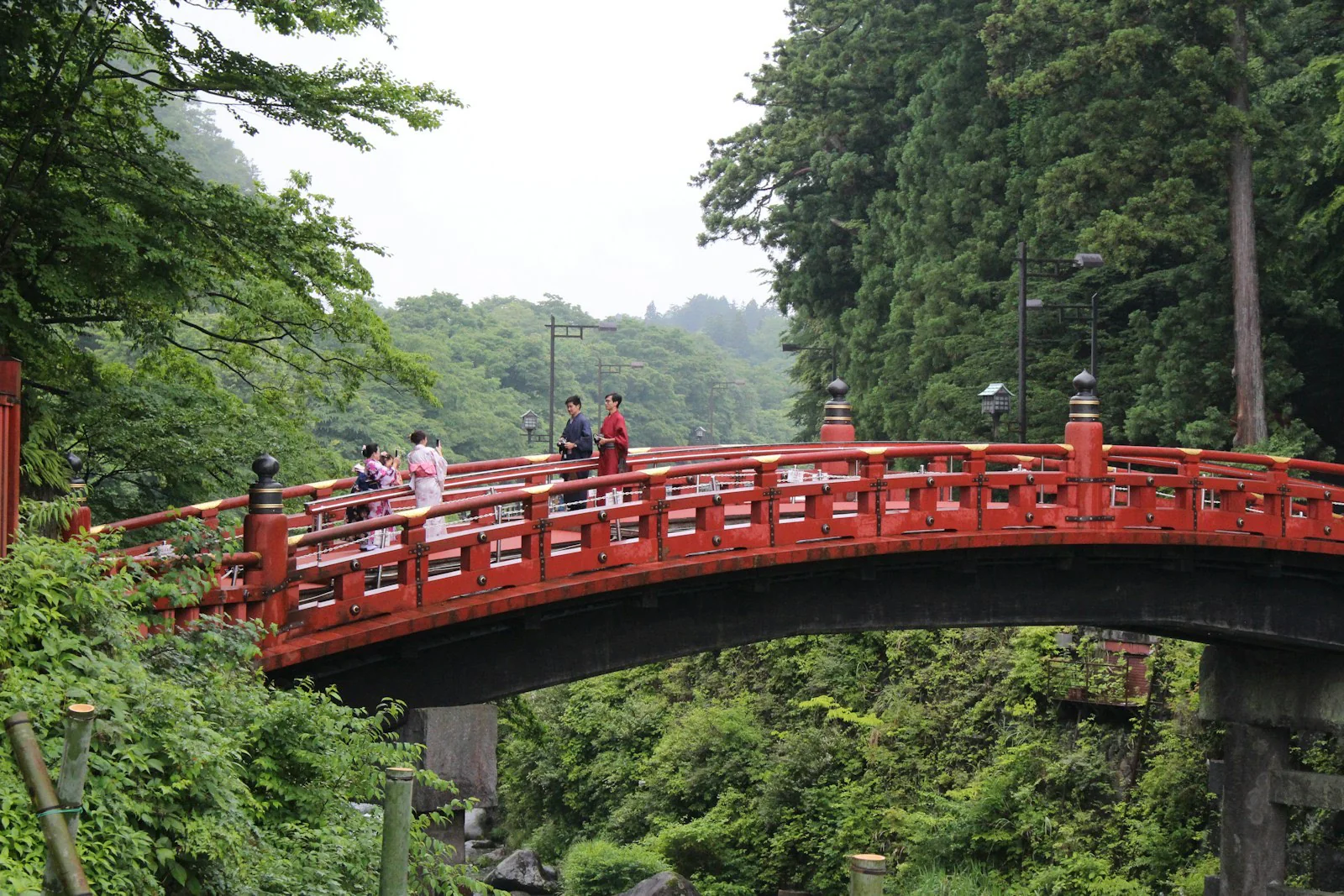
Nikko日光
A mountain town two hours north of Tokyo where Tokugawa Ieyasu's gloriously over-the-top Tōshōgū shrine and its UNESCO companions stand among towering cedars — and, up the hairpin Irohazaka road, the waterfalls and lake of Oku-Nikko. A shrine-and-nature day-trip (or an easy overnight), famous too for its 'yuba' tofu-skin cuisine.
Shrines Nature History Day trip
Also works as a day trip from Tokyo.
Verified highlights
Kegon FallsLandmark
Step-free
One of Japan's most famous waterfalls — a 97-metre column plunging from Lake Chūzenji into a rocky gorge, thunderous in spring melt and framed by fiery maples in autumn.
Meiji-no-Yakata (Western dining)Food
Cards OK
A refined yōshoku restaurant in a 1900s stone villa near Tōshōgū, famous for its cheese-baked omelette rice and beef stew, plus Nikko yuba dishes, in an elegant period setting.
Lake ChūzenjiLandmark
Step-free
A serene highland lake formed by an ancient eruption of Mt Nantai, ringed by forested peaks, with a lakeside promenade, sightseeing boats and cafés.
Hippari Dako (yakitori & oden)Food
Vegetarian options Vegan options Cash only
A tiny, much-loved diner near the Shinkyo bridge whose walls are papered with travellers' notes - yakitori, yuba dishes and a dedicated vegetarian menu (most of it vegan; ask for no dashi if strict).
Akechidaira Ropeway & ViewpointViewpoint
Step-free
A short ropeway near the top of the Irohazaka road to a platform with the classic panorama — Kegon Falls and Lake Chūzenji together below Mt Nantai.
Nikko Coffee (specialty roaster)Food
Vegetarian options Cards OK
A specialty coffee house in a renovated old-Nikko building - hand-drip coffee, galettes and natural-ice kakigori year-round.
Futarasan ShrineShrine
Step-free
The oldest shrine in Nikko, dedicated to the gods of the surrounding sacred mountains and predating Tōshōgū by centuries — a calmer, greener counterpoint among the cedars.
Chūzenji Kanaya Coffee HouseFood
Vegetarian options Cards OK Step-free
The lakeside Kanaya hotel's Coffee House Yukon - the famous '100-year curry', pizza and sandwiches in a calm wood-and-stone room near the Chuzenji shore.
Neighbourhoods
Nikko Shrines (World Heritage)
The UNESCO World Heritage precinct in the cedar forest — the dazzling carved gates of Tōshōgū (Ieyasu's mausoleum), the older Futarasan shrine, the great temple of Rinnō-ji and the serene Taiyū-in, all linked by stone paths under giant trees. The reason most people come to Nikko.
Nikko Town & Approach
The town strung along the road from the stations up to the Shinkyō bridge — yuba (tofu-skin) restaurants and old cafés, yokan sweet shops and souvenir stores, the historic Kanaya Hotel, and the haunting Kanmangafuchi Abyss with its row of mossy Jizō statues by the river. Where you eat and stroll between shrine and nature.
Oku-Nikko (Chūzenji & Kegon)
The highland up the twisting Irohazaka road — the thundering Kegon Falls plunging from Lake Chūzenji, the lake itself ringed by mountains, the Akechidaira viewpoint over it all, and the marshes and Ryūzu Falls beyond. Cool in summer and ablaze with colour in autumn; a full day of nature above the shrines.
Where to stay
Nikko Town & Approach
Around the two Nikko stations and the shrine approach — the cheapest, most connected base, with buses up to the shrines and to Oku-Nikko, and the town's yuba restaurants and cafés. Most visitors day-trip, but an overnight lets you see the shrines early.
Oku-Nikko (Chūzenji & Kegon)
Staying by Lake Chūzenji or in the Oku-Nikko hot springs is serene and scenic — best for nature lovers and autumn-leaf season, though it's up the mountain and quieter.
Some links may earn hi tabi a commission, at no extra cost to you.
Getting there
Tōbu-Nikkō Station (Tōbu Limited Express 'SPACIA')
The easiest route: the Tōbu Limited Express runs Asakusa → Tōbu-Nikkō in ~2 h. From the station, buses run up to the shrine area (~10 min) and on up the Irohazaka switchbacks to Chūzenji/Kegon (~50 min). The Nikkō Pass covers the buses.
JR Nikkō Station (from Shinjuku via through-service)
JR runs limited-express services from Shinjuku to Nikkō (~2 h) via a connection onto the Tōbu line. A rental car also works well and helps in Oku-Nikkō, but the Irohazaka road is one-way and busy in autumn.
FAQ
Is Nikko doable as a day trip from Tokyo?
Yes — the Tōbu SPACIA limited express from Asakusa takes about two hours to Tōbu-Nikkō. A day covers the Tōshōgū shrine complex comfortably; add the Irohazaka switchbacks up to Lake Chūzenji and Kegon Falls only if you start early or stay the night.
How much climbing do Nikko's shrines involve?
A fair amount — the World Heritage complex sits up flights of stone steps among the cedars, and Tōshōgū's famous sleeping-cat gate leads to another 200-plus steps to Ieyasu's tomb. Rinnō-ji and the main avenues are the gentler, mostly step-free part; tabi marks access per place.
When is autumn colour at its peak in Nikko?
Mid-October around Lake Chūzenji and Kegon Falls, late October to early November down at the shrines — the altitude difference staggers the season. The Irohazaka road is spectacular then, and gridlocked on weekends; go midweek and early.
How up to date is this information?
Every place in the catalog is human-checked, and volatile facts — opening hours, closures, payment — sit on a quarterly re-verification cycle. Plans and pages are regenerated with every site release, so what you read reflects the current catalog.