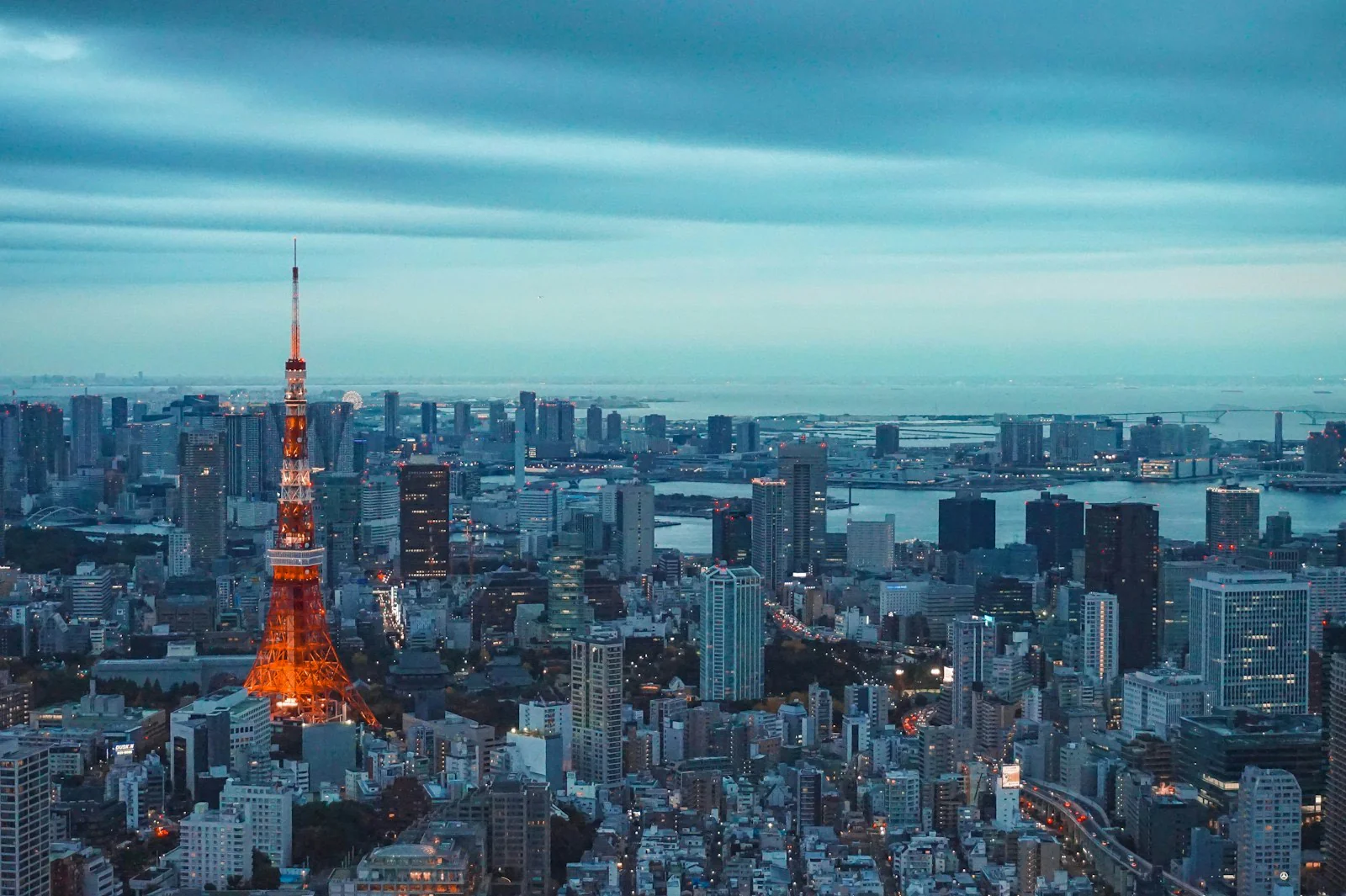
Tokyo東京
Japan's vast capital — a city of distinct neighbourhoods rather than one centre: old-temple Asakusa, neon Shibuya, mega-hub Shinjuku, museum-and-park Ueno, and the shrine-and-fashion belt of Harajuku. Superb trains tie it all together.
City Shopping Food Culture
Verified highlights
Senso-jiTemple
Step-free
Tokyo's oldest temple, approached through the Kaminarimon gate and Nakamise shopping street.
Kyubey (sushi)Food
Cards OK
A renowned Ginza Edomae sushi house — sit at the counter for omakase.
Meiji JinguShrine
Step-free
Tokyo's grandest shrine, set in a vast man-made forest beside Harajuku — huge wooden torii, a long gravel approach and a sense of calm minutes from the crowds.
Afuri (yuzu ramen)Food
Vegetarian options Vegan options Cards OK
Modern ramen known for its light, citrusy yuzu-shio broth — a refreshing change from heavy tonkotsu, handy after Meiji Jingu.
Ghibli Museum, MitakaMuseum
Step-free
Hayao Miyazaki's whimsical museum on the edge of Inokashira Park — a Catbus for kids, a rooftop robot, original art and a members-only short film.
Satou (Matsuzaka menchi-katsu)Food
Alcohol-free Cash only
A butcher shop whose ground-floor counter sells the legendary 'Genghis Khan' menchi-katsu — a juicy deep-fried wagyu-and-onion patty eaten on the street.
Tokyo DisneylandTheme park
Step-free
The classic castle park with Tokyo twists — full of parades, seasonal events and beloved rides.
Aoba (Nakano honten)Food
Alcohol-free Cash only
The original Aoba, credited with popularising the 'W-soup' blend of pork-bone and fish stock that defined modern Tokyo ramen.
Neighbourhoods
Asakusa
Old downtown Tokyo: the Senso-ji temple and its Nakamise souvenir street, rickshaws, traditional sweets, and Tokyo Skytree rising across the river. The city's most atmospheric, lower-cost quarter — best early before the crowds.
Shibuya
Tokyo at full volume: the famous scramble crossing, the Hachiko statue, towering screens, fashion buildings and a rooftop sky deck — plus tiny drinking alleys tucked behind it all. Youthful, neon, endlessly walkable.
Shinjuku
The world's busiest station and a neighbourhood of extremes: the serene Gyoen garden, free skyscraper views from the Metropolitan Government Building, the retro food alleys of Omoide Yokocho, and the neon nightlife of Kabukicho. Something open at every hour.
Ueno
Culture and bustle around Ueno Park: Japan's greatest museums, a zoo with pandas, and the boisterous Ameyoko market street beside the station. A family-friendly, good-value day in the old east side.
Harajuku & Meiji Jingu
A study in contrasts: the vast forested Meiji Shrine and Yoyogi Park on one side, and the teen-fashion frenzy of Takeshita Street with the upscale boutiques of Omotesando on the other. Shrine in the morning, shopping and crepes after.
Ginza
Tokyo's most elegant shopping district — flagship department stores and luxury boutiques along Chuo-dori (pedestrianised on weekend afternoons), the kabuki theatre, and serious sushi down the side streets. Refined, grown-up window-shopping.
Akihabara
'Akiba' — the electronics-and-otaku capital: multi-floor camera megastores, anime and figure shops, retro-game dens, arcades and maid cafés. Sensory overload, best dived into on foot.
Tokyo Station & Marunouchi
The polished business core: the restored red-brick Tokyo Station, tree-lined Naka-dori boutiques, the KITTE and Marunouchi buildings, and the moats and lawns of the Imperial Palace East Gardens just west. Smart, central and superbly connected.
Tsukiji & Toyosu (Markets)
Tokyo's seafood heart: the buzzing Tsukiji Outer Market for street-food and knives, the giant modern Toyosu wholesale market with its tuna auction, and teamLab Planets' digital-art baths a short walk away. Come hungry and early.
Odaiba
A man-made bayfront island of malls, a beach with Rainbow Bridge views and a replica Statue of Liberty, the life-size Unicorn Gundam, and big entertainment complexes. Reached by the driverless Yurikamome over the bay — a fun, family-friendly half-day.
Roppongi
Tokyo's art-and-nightlife district: the Mori Art Museum and Tokyo City View atop Roppongi Hills, the design-led Tokyo Midtown and Suntory Museum, teamLab Borderless at Azabudai Hills, and after dark a dense run of bars and clubs. A culture-by-day, lights-by-night neighborhood.
Ikebukuro
A busy north-Tokyo hub built around the Sunshine City complex — an aquarium in the sky, an observation deck, planetarium and malls — plus 'Otome Road', the anime-and-manga strip aimed at female fans, and some of the city's most beloved ramen. Less polished than Shibuya, more everyday Tokyo.
Nakameguro & Daikanyama
Tokyo's most stylish low-rise quarter: the willow-and-cherry-lined Meguro River with its canal-side cafés (peak magic in late-March blossom season), the book-lover's Daikanyama T-Site, and a slow drift of design shops, roasteries and bistros. A grown-up, unhurried day.
Yanaka
Old 'shitamachi' Tokyo that survived the war and the bubble: temple-lined lanes, a cherry-blossom cemetery, the wisteria-famous Nezu Shrine, and the nostalgic Yanaka Ginza shopping street with its cats, croquettes and traditional sweets. The city at walking pace.
Ryogoku
The home of sumo: the Kokugikan arena hosts three of the six annual grand tournaments, the streets are dotted with sumo stables and chanko-nabe hotpot restaurants, and the Sumida Hokusai Museum and Kyu-Yasuda garden round out an Edo-flavoured day east of the Sumida River.
Shimokitazawa
Tokyo's bohemian heart — a car-light maze of vintage-clothing stores, tiny live-music venues and fringe theatres, second-hand record shops, soup-curry joints and indie cafés. Recently joined by the BONUS TRACK and reload low-rise complexes. Best wandered slowly with no plan.
Tokyo Disney Resort (Maihama)
Japan's Disney twin-park resort, a short train ride east of central Tokyo: the classic Tokyo Disneyland and the world-unique, nautical Tokyo DisneySea, plus the Ikspiari mall and resort hotels. Each park is a full day on its own — buy dated tickets ahead and pick one per visit.
Warner Bros. Studio Tour Tokyo (Nerima)
Residential north-west Tokyo whose draw is the Warner Bros. Studio Tour Tokyo — 'The Making of Harry Potter', a vast indoor walk-through of film sets, props and effects on the former Toshimaen site. Pre-booked, weatherproof and stroller-friendly; pair it with the big family green of Hikarigaoka Park.
Kichijoji
Repeatedly voted Tokyo's most liveable suburb: the lake, swan boats and cherry trees of Inokashira Park, the Ghibli Museum on its western edge (separate timed ticket), and a dense, walkable grid of shopping arcades, the retro Harmonica Yokocho alley and beloved cheap eats. A relaxed, local, family-friendly day.
Koenji
Tokyo's punk-and-vintage soul: streets thick with second-hand clothing stores, record shops, tiny live houses and cheap izakaya, plus the Awa Odori dance festival each August. Grittier and more local than Shimokitazawa, it rewards aimless wandering and bar-hopping after dark.
Nakano
An alternative Akihabara: the warren-like Nakano Broadway mall is a temple of vintage manga, figures, retro toys and the original Mandarake, reached down the covered Sun Mall arcade packed with cheap eats and izakaya. A deeper, more collector-driven otaku day, with the old Araiyakushi temple a short walk north.
Ebisu
A grown-up dining-and-drinking quarter named after the beer first brewed here: the elegant Yebisu Garden Place with its beer museum and château restaurant, the buzzing lantern-lit Ebisu Yokocho, and streets of quietly excellent restaurants. Sophisticated and relaxed, and a short walk from Daikanyama.
Where to stay
Shinjuku
The transport mega-hub — unbeatable train access, endless dining and nightlife. Busy and convenient for first-timers.
Shibuya
Central, youthful and well-connected — walkable to Harajuku and on every major line.
Asakusa
Traditional, lower-priced and atmospheric, with Skytree views — quieter, a bit further from the nightlife.
Tokyo Station & Marunouchi
By Tokyo Station — the best base for Shinkansen day-trips and onward travel; upscale and central, quieter at night.
Ginza
Elegant and central for upscale shopping and dining, walkable to Tsukiji; a refined, pricier base.
Some links may earn hi tabi a commission, at no extra cost to you.
Getting there
Haneda Airport (HND)
Closest airport — ~30-45 min to central Tokyo by Tokyo Monorail or Keikyu line.
Narita Airport (NRT)
~60-90 min via the Narita Express (to Tokyo/Shinjuku) or the Keisei Skyliner (to Ueno).
Shinjuku Station (Odakyu Romancecar)
Odakyu Romancecar from Shinjuku to Hakone-Yumoto (~85 min); the Fuji Excursion limited express runs Shinjuku → Kawaguchiko (~2h).
Tokyo Station
The Tokaido/Tohoku/Hokuriku Shinkansen hub — ~2h20 to Kyoto/Osaka.
FAQ
Is Tokyo stroller-friendly?
Largely yes — big stations have elevators and the parks and gardens are flat, but some older shrines and izakaya alleys aren't. tabi marks stroller-friendliness per place instead of guessing.
How many days do you need in Tokyo?
Five days covers the core at one neighbourhood per day — Asakusa, Shibuya, Shinjuku, Ueno and one of the west-side districts — without the cross-town backtracking that wastes most first trips.
Can you eat vegetarian in Tokyo?
Yes, if you know exactly where: hidden dashi and meat stock are the usual traps. tabi verified vegetarian options per restaurant against real menus — see the vegetarian Tokyo template for a full plan.
How up to date is this information?
Every place in the catalog is human-checked, and volatile facts — opening hours, closures, payment — sit on a quarterly re-verification cycle. Plans and pages are regenerated with every site release, so what you read reflects the current catalog.
Plans that include Tokyo
- The Golden Route — Tokyo, Kyoto & Osaka in 10 days
- Nature & onsen — Tokyo, Hakone & Fuji
- Tokyo solo — 5 days, packed
- Tokyo, the weekend after your meetings
- Vegetarian Tokyo — 4 days, every meal verified
- Tokyo, Kanazawa & Kyoto — gardens, gold leaf and geisha districts in 8 days
- Tokyo, Kamakura & Nikkō — the Great Buddha, cedar avenues and UNESCO shrines in 6 days
- Tokyo 3-day itinerary