Amsterdam
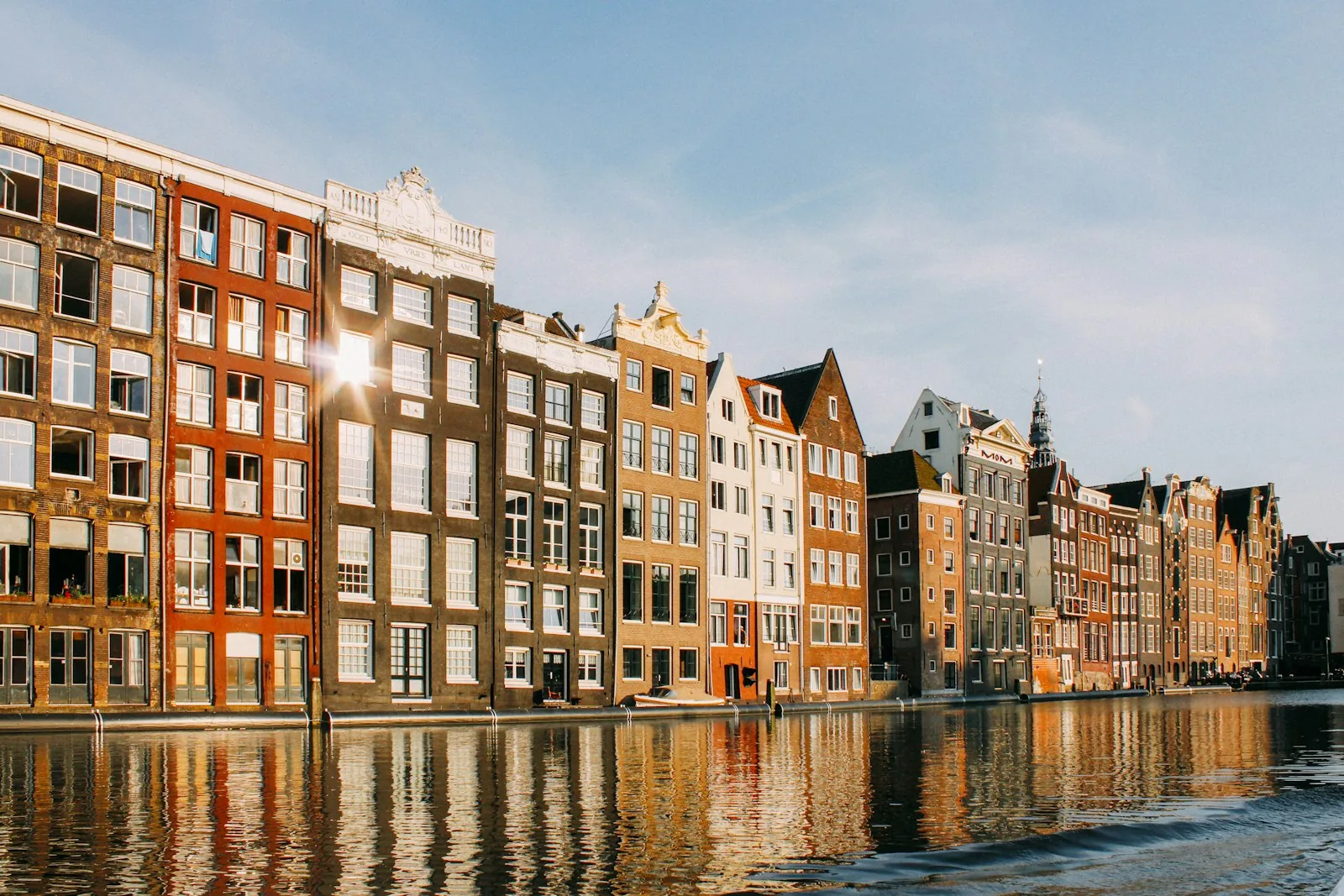
A city built on piles and organised by water — four concentric canals wrapped around a medieval core, gabled merchant houses leaning over the water, and two of Europe's great museums a tram ride south. Everything is walkable and almost everything is flat, but the bikes own the road and dinner starts early by continental standards.
Art Architecture History Food Nightlife
Verified highlights
Anne Frank HouseMuseum
Cards OK
The canal house where Anne Frank and seven others hid for two years during the German occupation, preserved behind the revolving bookcase largely as they left it.
De CeuvelFood
Vegetarian options Vegan options Cards OK
A cafe on a former shipyard plot of old houseboats raised on stilts over decontaminating soil, run as a cleantech and urban-farming showcase — genuinely still open and running its own events calendar for 2026.
RijksmuseumMuseum
Step-free
The Netherlands' national museum opens every day of the year, 09:00-17:00, with no weekly closure day.
PllekFood
Vegetarian options Vegan options Cards OK
A big, laid-back restaurant and bar built into a converted shipping-container hall on a man-made beach facing the IJ at NDSM-werf — the kitchen serves food daily from 09:30 with the kitchen open until 22:00 (the bar itself runs later, until 01:00-02:00 on weekends).
Van Gogh MuseumMuseum
Step-free
Open daily 09:00-18:00, holding the world's largest Van Gogh collection including Sunflowers and The Bedroom.
Winkel 43Food
Vegetarian options Vegan options
The café most associated with Amsterdam's 'world-famous' apple pie, right on the corner of Noordermarkt with a sun-catching terrace that fills fast on market mornings.
The ConcertgebouwEntertainment
Step-free
One of the world's most acoustically celebrated concert halls, home to the Royal Concertgebouw Orchestra, on the square of the same name a short walk from the museums.
Café Loetje (Museumkwartier)Food
Vegetarian options Step-free
A branch of Amsterdam's best-known steak sandwich chain — started as a billiard café in 1977, now famous city-wide for its "biefstukje": tender steak in a rich jus with white bread, crispy fries and a small salad.
Neighbourhoods
Centrum & De Wallen
The medieval core and the oldest streets in the city — a royal palace facing a working square, a fourteenth-century church with a red-light district grown around it, and a hidden almshouse courtyard two minutes from the crowds.
Grachtengordel & Jordaan
The seventeenth-century canal ring and the working-class quarter beside it, now the city's most photographed streets — a house where a family hid for two years, a church tower you can climb, and nine little shopping lanes between the canals.
Museumkwartier & Vondelpark
Three major collections and a concert hall around one grassy square, with the city's biggest park behind them — the Dutch Golden Age in one building, Van Gogh's own hand in the next, and modern art across the plaza.
De Pijp
A dense nineteenth-century grid that became the city's kitchen — the longest daily street market in the Netherlands, a brewery turned attraction at its edge, and more terraces per block than anywhere else in Amsterdam.
Amsterdam-Noord
Across the water and reached by free ferry — former shipyards turned studios and festival grounds, a film museum shaped like a hull, and the only place in the city where you can swing off the roof of a tower.
Plantage & Oosterdok
The green, museum-heavy pocket east of the centre — a botanical garden the Dutch East India Company stocked, a zoo older than most European capitals', the resistance museum facing it, and the maritime collection in the admiralty's old storehouse on the water.
Where to stay
Grachtengordel & Jordaan
The canal ring and Jordaan are the postcard and the calmest central choice — everything inside 20 minutes on foot, at the cost of the highest room rates.
De Pijp
Where the city actually eats — a daily street market, terraces on every corner, and a short tram to the museums for noticeably less money.
Museumkwartier & Vondelpark
Calm, green and residential, with the Rijksmuseum and Van Gogh at the end of the street and the Vondelpark behind — good if the art is why you came.
Some links may earn hi tabi a commission, at no extra cost to you.
Getting there
Amsterdam Airport Schiphol (AMS)
Trains run from directly beneath the terminal to Amsterdam Centraal several times an hour and take about a quarter of an hour — there is no need for a taxi or a transfer bus.
Amsterdam Centraal
The hub for everything: Eurostar and Thalys south to Brussels and Paris, ICE east into Germany, and the domestic network to Rotterdam, Utrecht and the Hague. The free ferries to Amsterdam-Noord leave from the back of the station.
FAQ
What is Amsterdam best for?
Amsterdam is best for Art, Architecture, History, Food, Nightlife. A city built on piles and organised by water — four concentric canals wrapped around a medieval core, gabled merchant houses leaning over the water, and two of Europe's great museums a tram ride south.
How up to date is this information?
Every place in the catalog is human-checked, and volatile facts — opening hours, closures, payment — sit on a quarterly re-verification cycle. Plans and pages are regenerated with every site release, so what you read reflects the current catalog.