
Rome & Naples — the imperial capital and the volcanic south in 6 days
Three days among Rome's ruins, fountains and piazzas, then just over an hour south on the Frecciarossa to Naples — louder, older and stacked in layers. Spaccanapoli's UNESCO alleys and the chapel with the Veiled Christ, the archaeological museum holding most of what Pompeii and Herculaneum gave up, the hilltop fortresses looking down the bay to Vesuvius, and pizza in the city that invented it. Every stop below is human-verified, including the awkward truths: the Vomero museums moved their weekly closure to Tuesday in July 2026, and Castel dell'Ovo's interior is shut for a multi-year restoration, so that stop is the islet and Borgo Marinari walk. Saved once, the whole plan works offline.
· generated from the verified catalog · regenerated with every release
Rome · 3 days
Stay near Historic Centre Hotels on Klook ↗
Historic Centre & nearby — a sights day
Baroque Rome at its most theatrical — the Pantheon's coffered dome, Bernini's fountains in Piazza Navona, and Campo de' Fiori's morning market give way to café tables after dark. The Trevi Fountain is unmissable but always crowded — go at dawn or late evening to actually see it, and mind the pickpockets in the crush.
- 08:0008:30BreakfastPick a spot nearby — not booked yet
- 08:3009:10
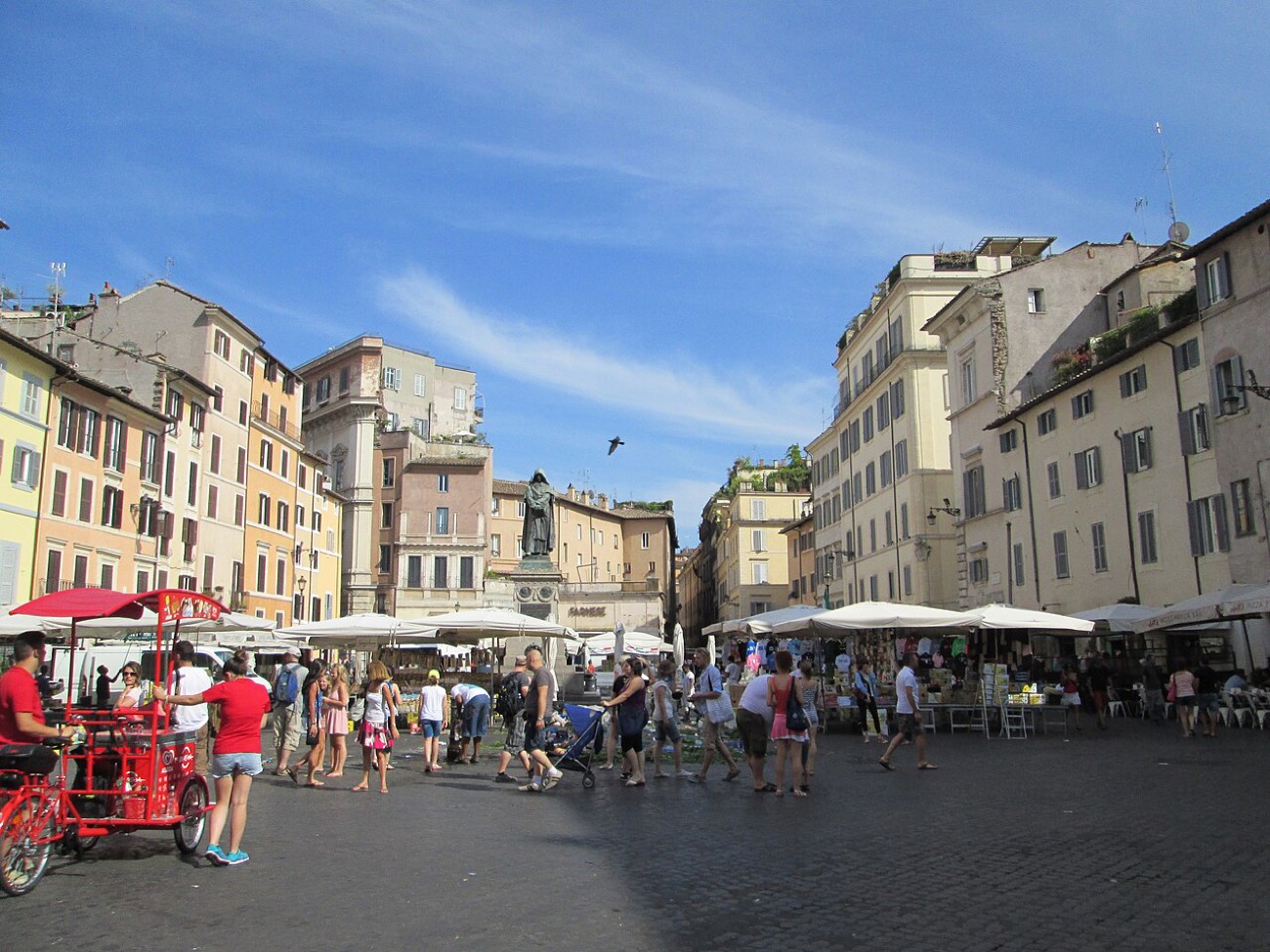 MarketCampo de' Fiori40 min
A working morning market since 1869, when it replaced the fruit-and-vegetable stalls that used to fill Piazza Navona — flowers, produce, spices and Roman souvenirs crowd the square Monday to Saturday, 7:00–14:00, then vanish by mid-afternoon for the evening bar and restaurant crowd. At the centre, a brooding bronze statue marks where the philosopher Giordano Bruno was burned at the stake in 1600 for heresy — he still faces the Vatican. No entry fee; bring small cash, since some stalls don't run cards.
marketfood markethistoric - 09:10~10 min walkroute
- 09:2510:40
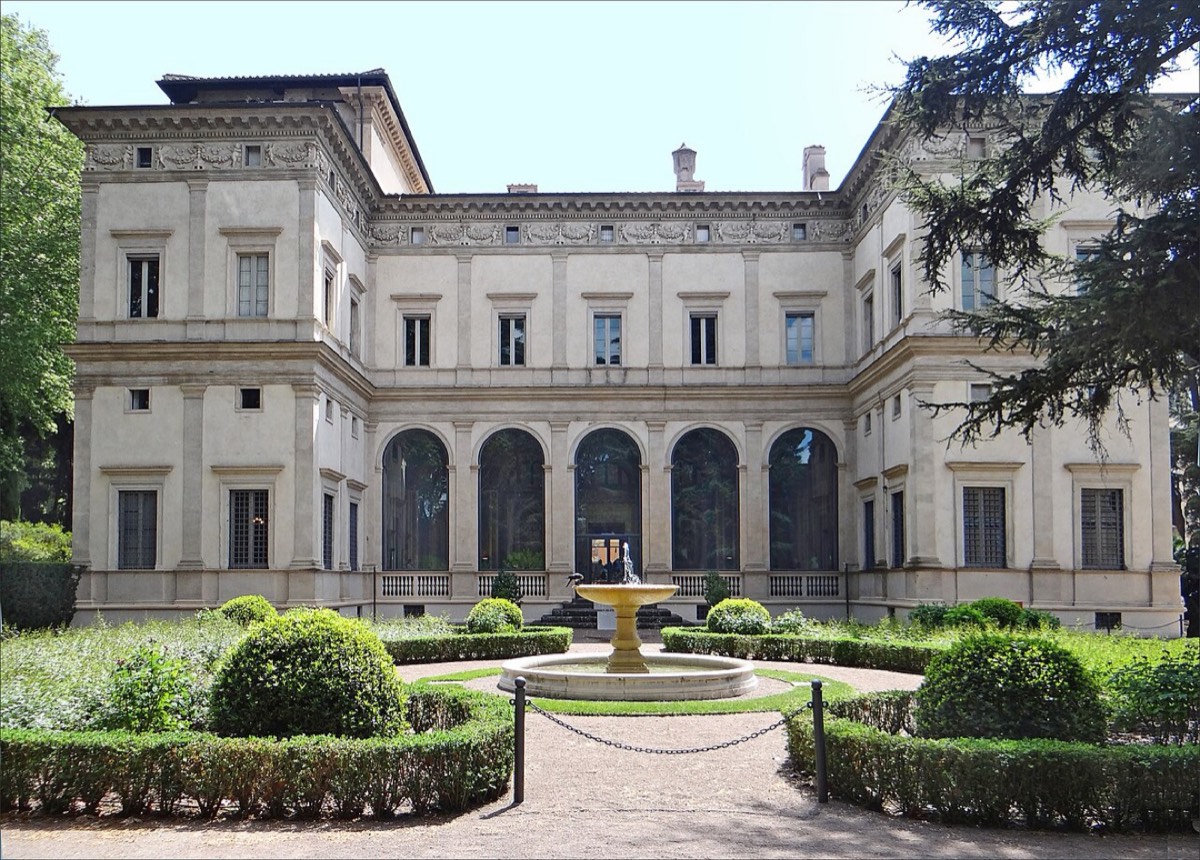 Museum75 min
A Renaissance banker's pleasure villa turned museum, its ground-floor loggias frescoed by Raphael and his workshop — the Loggia of Cupid and Psyche's ceiling and the adjoining Galatea fresco, painted around 1517-1519 for the banker Agostino Chigi, are the highlights. Unlike most Rome museums, it keeps mornings-only hours: Monday to Saturday 9am-2pm (last admission 1:15pm), closed Sundays except the second Sunday of each month (9am-5pm, with a curated concert at 11:30am) — plan a morning visit here, not an afternoon one. Full ticket €12, reduced €10; a ramp gives step-free entry at the main loggia and a lift reaches the upper floor. A quiet, often near-empty counterpoint to the crowds across the river in Centro Storico.
Cards OKStep-freemuseumhistoric villa - 10:40~15 min walkroute
- 10:5511:40
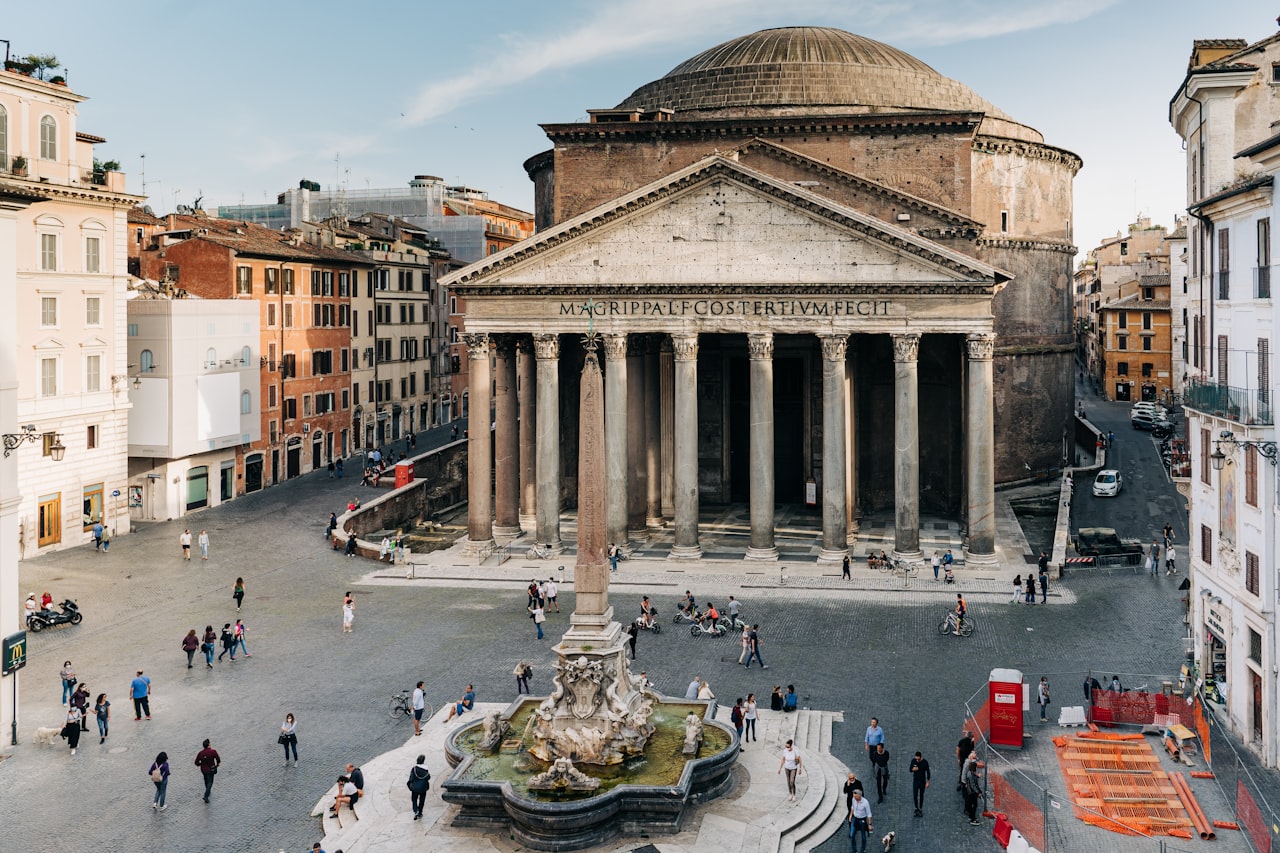 Historic site45 min
Ancient Rome's best-preserved monument — a 2,000-year-old dome with a 9-metre oculus still open to the sky, and no visible support columns holding it up. Entry now requires a paid, timed ticket (raised to €7 on 1 July 2026, from the €5 fee introduced in 2023); reduced €2 for EU citizens 18–25, free under 18 and on the first Sunday of the month (queue on-site for that slot — no online booking for free Sundays). Book the standard timed entry on the Musei Italiani site or app days ahead to skip the door queue; dress modestly (shoulders and knees covered) since it still functions as a working church. A ramp on the Via della Minerva side gives step-free access.
Cards OKStep-freehistoricalancient rome - 11:40~5 min walkroute
- 12:0013:00LunchSuggested
- 13:0013:40
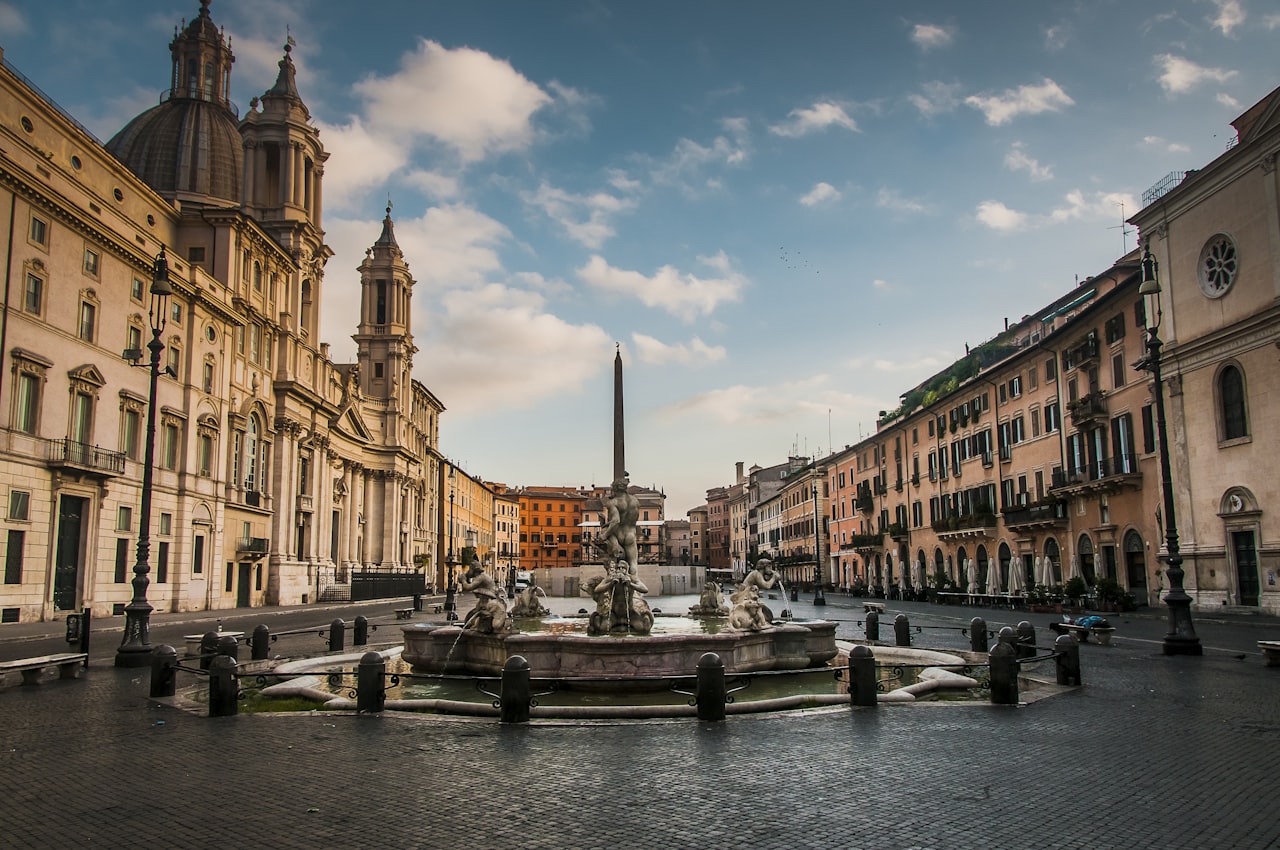 Landmark40 min
Rome's grandest baroque piazza, laid out on the oval footprint of Domitian's 1st-century stadium — Bernini's Fountain of the Four Rivers anchors the centre, flanked by his Moor Fountain and the Fountain of Neptune, all freshly restored for the 2025 Jubilee. Free to enter any time; street artists, portrait painters and gelato stands crowd the edges by day, café terraces take over by evening. No ticket, no queue — just come, though café tables here charge a premium for the view.
piazzafountainbaroque - 13:40~15 min walkroute
- 13:5514:15
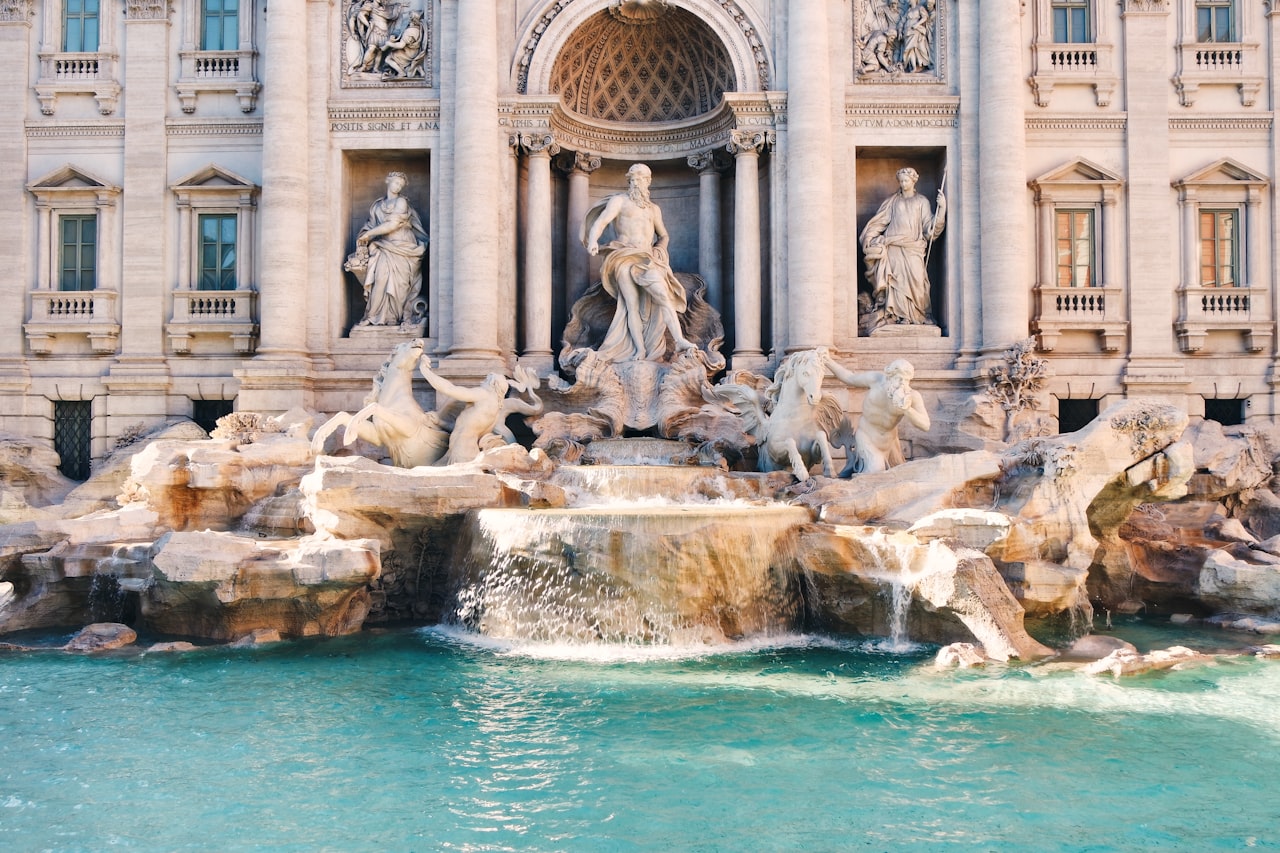 LandmarkFontana di Trevi20 min
Rome's most theatrical fountain — Neptune's chariot pulled by sea-horses through a wall of travertine, restored to a gleam for the 2025 Jubilee. Since February 2026, non-residents pay €2 to step down onto the basin's stone edge for the classic coin-toss photo (tap a card or phone at the on-site machines, or book at fontanaditrevi.roma.it); viewing from the piazza itself stays free, and the fee doesn't apply after 22:00 or before 09:00 (11:30 on Mondays and Fridays) — go late evening or early morning for both a thinner crowd and a free basin. Legend says a coin thrown over your shoulder with your right hand guarantees a return to Rome.
Cards OKfountainlandmarkmust see - 14:15Transit ~15–25 minroute
- 14:3015:00
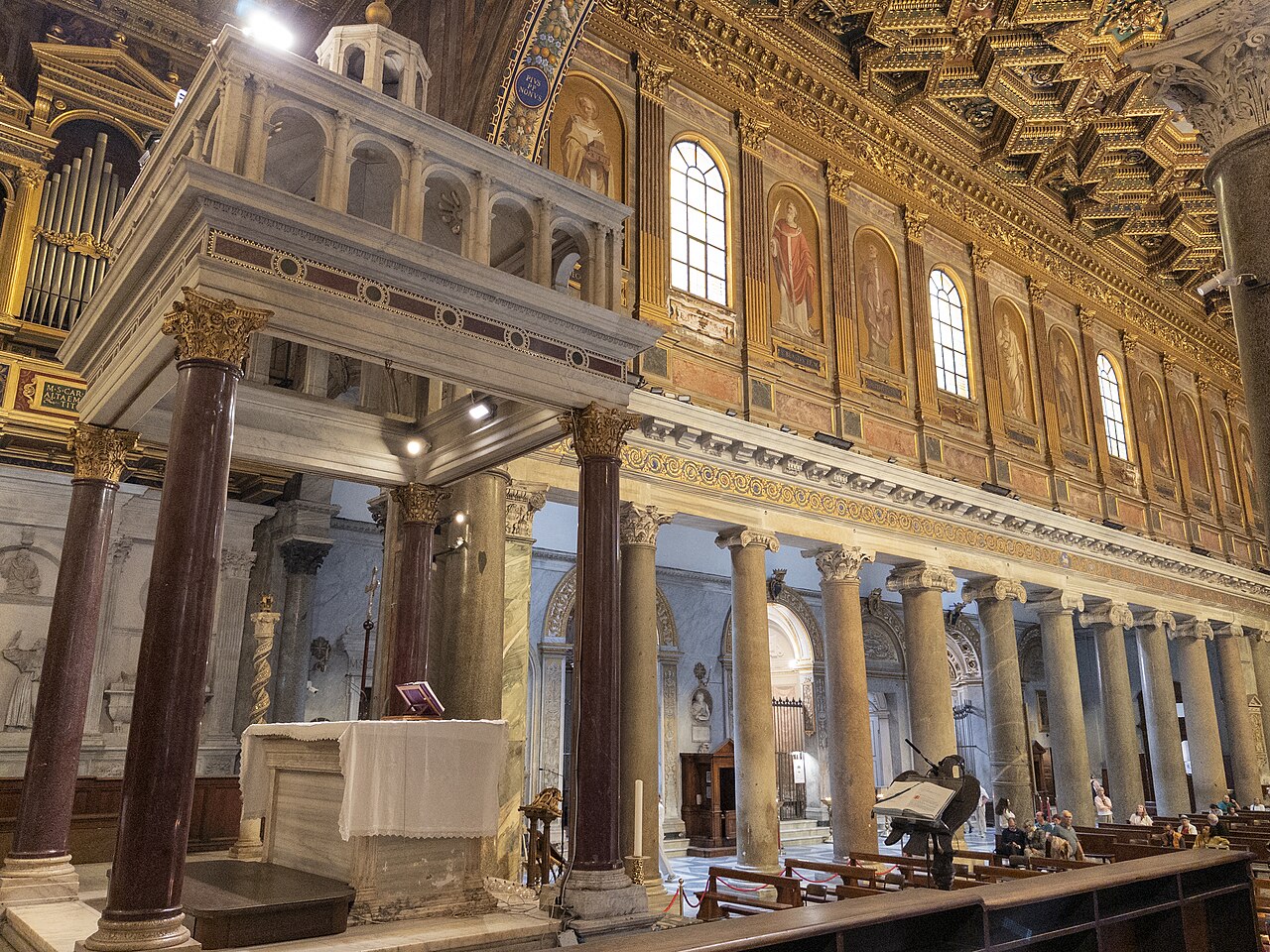 Church30 min
One of Rome's oldest churches dedicated to the Virgin — founded in the early 4th century and rebuilt into its current form around 1148 — famous for the glowing 12th-century apse mosaic of Christ enthroned beside Mary, with Pietro Cavallini's 13th-century Life of the Virgin cycle in the same apse below it. Free entry, no ticket needed, roughly 7:30am to 8pm daily (hours run shorter in August and visits pause during Mass, so check locally if you're set on a specific time). The piazza outside, built around one of Rome's oldest public fountains, is Trastevere's social heart from morning coffee through to the evening crowd.
churchbyzantinemosaics - 15:00~10 min walkroute
- 15:1515:55
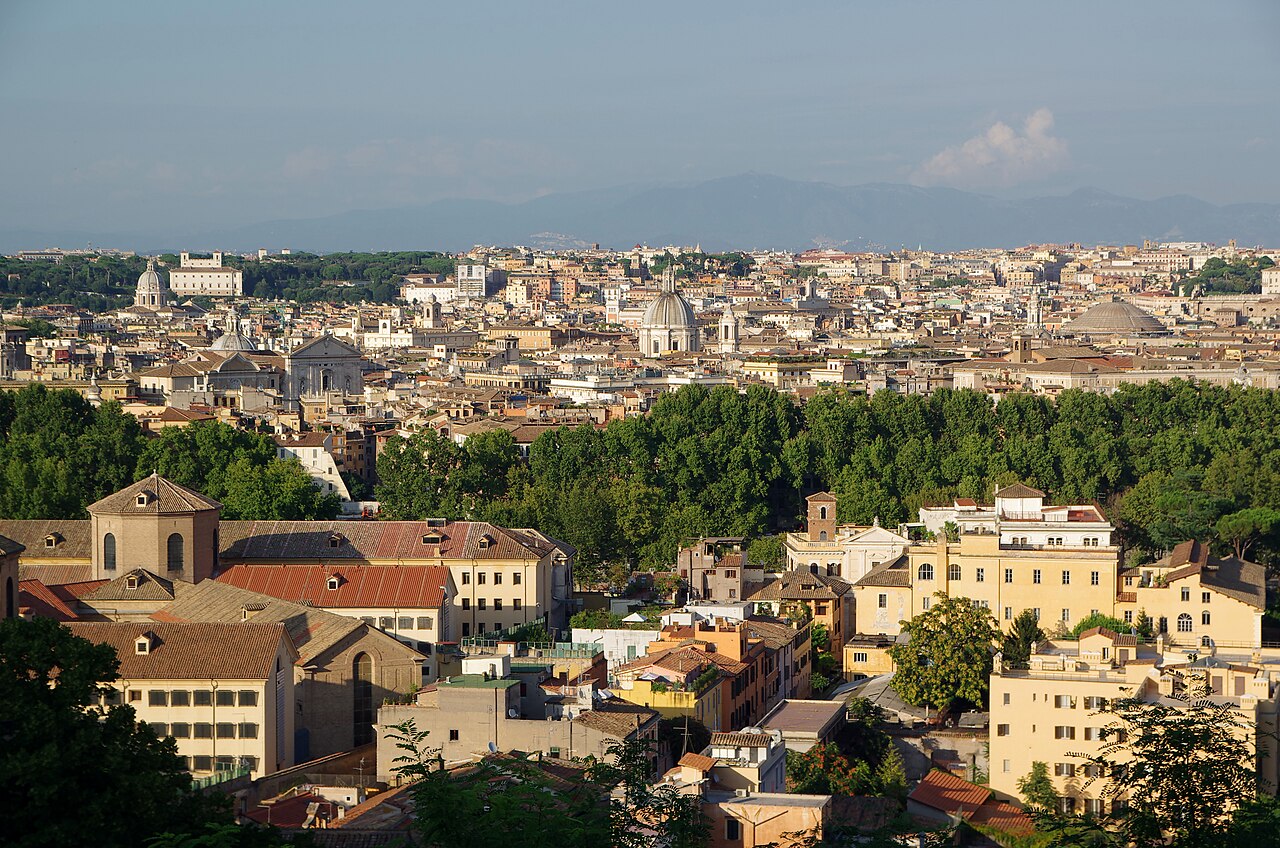 ViewpointGianicolo40 min
Rome's widest panoramic view, unfolding from St Peter's dome across every rooftop and hill of the historic centre — reachable by a stiff 20-25 minute uphill walk from Trastevere, or more easily by bus 115 or a taxi straight to the piazzale. Time it for noon: a cannon has been fired from just below the terrace, beneath the equestrian statue of Giuseppe Garibaldi, every single day since 1847 (originally to give Rome's churches one shared signal to synchronise their bells) — the blank round is loud enough to hear across much of central Rome, and you can walk right up to watch two uniformed attendants load and fire it. Free to visit any time; a few kiosks along the terrace sell drinks and snacks for a cheap view-side aperitivo.
viewpointpanoramacity view - 17:3018:45DinnerSuggested


Alternatives for Day 1
Swap something out, or add another verified stop nearby — 3 available

Book ahead — this is close to mandatory. The standard adult ticket is €20 at the door or €25 online (the €5 booking fee buys you a fixed entry slot instead of the walk-up queue, which can run hours). Open Monday–Saturday 08:00–20:00 with last entry at 18:00; closed on regular Sundays, but the last Sunday of every month opens free 09:00–14:00 (last entry 12:30) — unbooked and, predictably, the single most crowded morning of the month, so it trades a fee for a crush. Select Fridays between April and October add a quieter, atmospheric evening opening, booking-only. The visit is a fixed one-way route roughly 7km long ending at the Sistine Chapel — you can't skip to it directly, so budget a real 3+ hours. Ramps, elevators and an accessible route cover most galleries including the Sistine Chapel; disabled visitors plus one companion enter free with documentation, and free wheelchairs are available at the entrance.
Rome's most argued-about espresso, roasted in-house since 1938 over a wood fire and pulled through a secret machine that whips sugar straight into the crema — the gran caffè arrives pre-sweetened by default, so say "amaro" if you take it black or "poco zucchero" for a little sugar. A quick espresso at the marble counter runs €1.20–1.50; sitting at one of the few outdoor tables costs more. Open until 1am most nights (1:30am Friday, 2am Saturday) — a good late espresso stop after dinner. Card and contactless (including Amex) are accepted alongside cash.
Chef Arcangelo Dandini's take on Roman classics — the same dishes as any trattoria (carbonara, offal, oxtail) but refined and personal, in a quiet stretch of Prati near the river rather than a tourist strip. A current Michelin Guide Italia selection, without the Vatican-adjacent crowds. Closed Sundays and Saturday lunch; book a few days out, especially for Friday or Saturday dinner. Expect roughly €50–70 a head à la carte with wine — a step up from a neighbourhood trattoria, priced accordingly.
Monti & the Colosseum & nearby — a sights day
The Colosseum, Roman Forum and Palatine Hill sit on one combined ticket — book timed-entry online days ahead, since walk-up lines can run past an hour in summer. A few minutes north, Monti's sloped cobblestone streets swap ruins for vintage shops, wine bars and Rome's most villagey feel this close to the centre.
- 08:3009:00BreakfastSuggested
- 09:0010:30
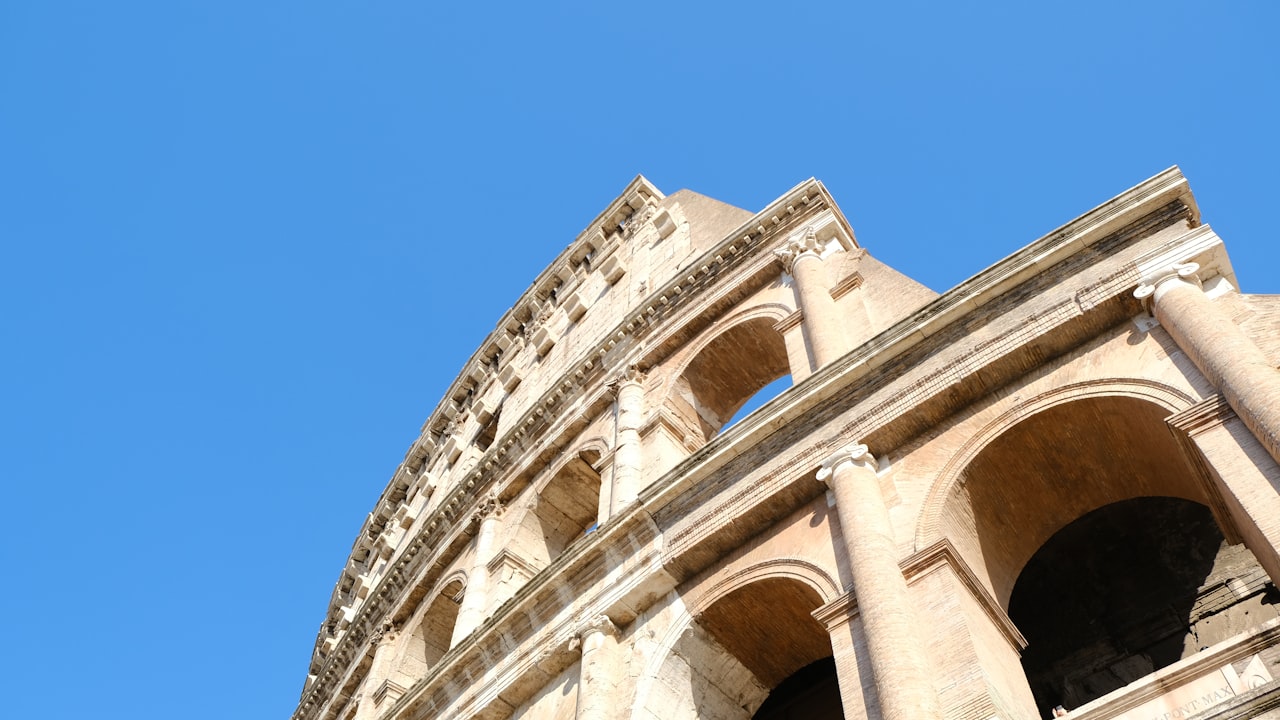 Historic siteColosseo90 min
Rome's ancient amphitheatre, and the single most booked sight in Italy — as of April 2024, ticketing moved off CoopCulture entirely onto the Parco Archeologico del Colosseo's own site (ticketing.colosseo.it); buy only there or at official partner sites, never a .com reseller. The standard ticket (€18) is nominative — tied to your name, checked against photo ID at the gate — and covers one entry each to the Colosseum, Roman Forum and Palatine Hill within 24 hours. Slots release exactly 30 days ahead at 9:00 Rome time and the summer 08:30–19:15 window sells out fastest at peak hours. The Full Experience upgrade (Underground & Arena, €24 + a non-refundable €2 booking fee) adds the reconstructed arena floor and the gladiator/animal tunnels beneath it — the best add-on for a first visit, but it sells out within minutes of release, so book the moment your date opens. A dedicated accessible entrance, lifts between levels and free wheelchair loan are available at the reception/security office; disabled visitors plus one companion enter free.
Cards OKStep-freeancient romehistorical - 10:30~5 min walkroute
- 10:4511:05
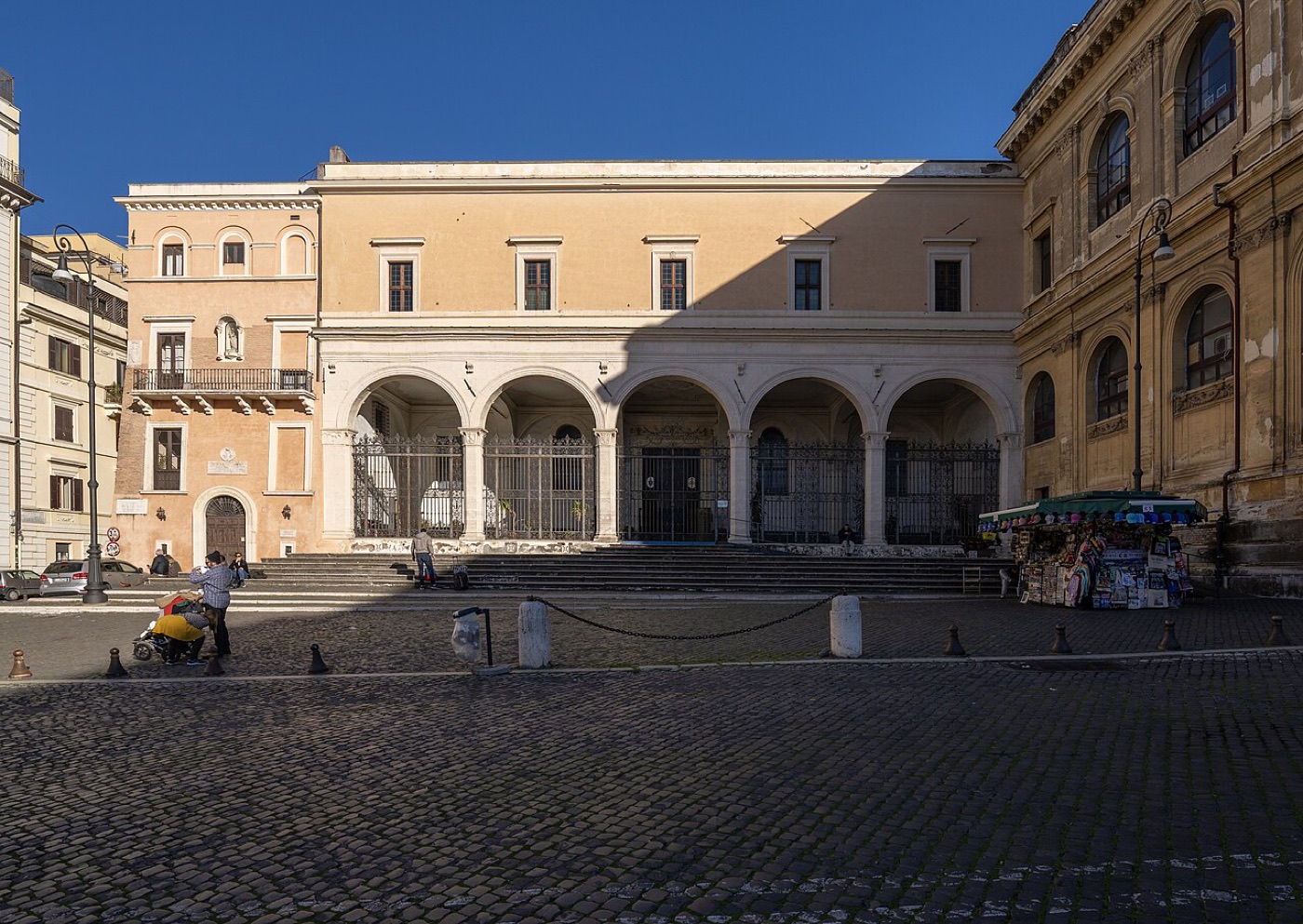 ChurchSan Pietro in Vincoli20 min
Free entry to see one of Michelangelo's greatest sculptures without a ticket, a booking, or a crowd — his seated Moses, muscular and horned per medieval iconography, was carved for Pope Julius II's never-finished tomb and anchors the right transept. The church closes for a genuine midday break, roughly 12:30–15:00 (stretching later into the evening — up to 19:00 — in summer), so plan around lunch rather than showing up at 13:00. It's two minutes uphill from the Colosseum but sees a fraction of the visitors. Note the entrance is a flight of steps with no ramp — not workable for wheelchairs or strollers without prior arrangement with staff.
churchhistoricalmust see - 11:05~5 min walkroute
- 11:2011:50Landmark30 min
Monti's living room — a small fountain-centred square where the neighbourhood actually sits, day and night, on the steps around the basin. It's the natural hub for wandering the sloped, cobbled lanes fanning out from it — Via del Boschetto and Via dei Serpenti for vintage and indie shops, Via Urbana for a quieter stroll — all a five-minute walk from the Colosseum but feeling like a different, villagey Rome. No opening hours, no ticket: come for an aperitivo at dusk when the square fills up and stays that way past midnight on weekends.
piazzavillagestrolling - 11:50~10 min walkroute
- 12:0513:05LunchSuggested
- 13:0515:05
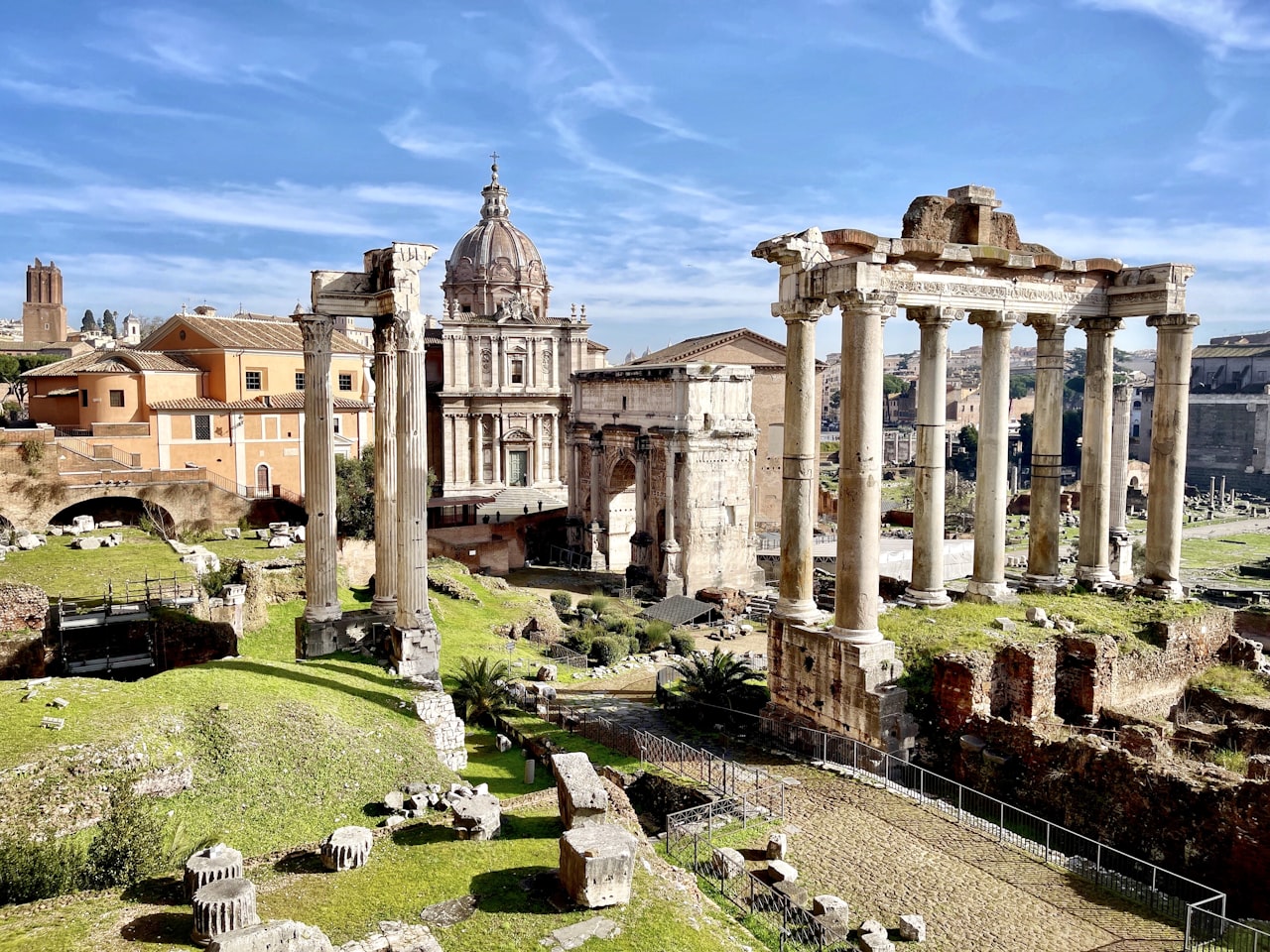 Historic siteForo Romano e Palatino120 min
The same nominative ticket that gets you into the Colosseum also covers one entry each here — no separate booking, just walk in with the same QR code within its 24-hour window. The main visitor entrance sits at Largo della Salara Vecchia near the Arch of Titus, with a second access point off Via di San Gregorio. Give it a solid two hours: the Forum's temple foundations and the Palatine's imperial palace ruins (with sweeping views down over the Circus Maximus) reward slow wandering, and there's almost no shade — bring water and a hat in summer. Roughly a fifth of the site is step-free and wheelchair-passable via ramps and lifts near the main entrances; the rest is original ancient stone paving, uneven and gap-ridden, so wheelchair users should ask staff about the accessible route and the golf-cart shuttle on request.
Cards OKancient romeruinshistorical - 15:05Transit ~15–25 minroute
- 15:2016:20MarketMercato di Testaccio60 min
Rome's best working food market, rebuilt into a modern covered hall in 2012 and still run for locals first — lunch-counter stalls like Mordi e Vai (offal panini) and Casa Manco (fried supplì) draw a midday crowd of market workers and regulars rather than tour groups. Open Monday to Saturday, 7:00–15:30, and closed all day Sunday — come before 11:00 for the fullest stalls, or a little later once the lunch counters start cooking. Bring some cash: bigger vendors take cards, but many of the smaller produce and deli stalls still prefer euros. A separate, ticketed Republican-era warehouse beneath the market (its walls built from reused amphorae) opens only on the second Tuesday of the month by guided visit — a different thing entirely from the food market above it.
marketfood marketstreet foodclosed this day — verify before going - 16:20~5 min walkroute
- 16:3517:35LandmarkMonte Testaccio60 min
An entire hill built from roughly 53 million broken ancient Roman amphorae — mostly olive-oil jars discarded over centuries as cargo was unloaded at the nearby river port — Monte Testaccio is genuinely one of Rome's strangest ancient sites, but it is not a park you can just walk up. The hill is fenced and managed as a protected archaeological area; the only way in is a reserved guided visit (call 060608 daily 9:00–19:00 to book, meeting point Via Nicola Zabaglia 24; €4 full / €3 reduced, free for Rome residents and MIC cardholders), and even then paths are uneven gravel and steps with no wheelchair access. A 2024–2026 restoration project aims to eventually reopen the summit for unrestricted public use, but as of writing it still isn't a walk-up site. Without a booking, the closest most visitors get is eating at one of the restaurants built directly into caves at its base — Flavio al Velavevodetto's dining rooms still have amphora shards visible in the walls.
landmarkancient romebook ahead - 17:5019:05DinnerSuggested


Alternatives for Day 2
Swap something out, or add another verified stop nearby — 2 available
A tiny, one-room trattoria on a quiet Trastevere side street, family-run since the 1970s and named Rome's best restaurant by Time Out in 2025 — the carbonara and cacio e pepe are the draws, alongside seasonal artichokes. Da Enzo takes zero reservations, for lunch or dinner: arrive 30-60 minutes before the 12:15 lunch or 19:00 dinner opening for a real shot at a table, since a queue of an hour or more forms fast once the doors open (staff sometimes pour a welcome glass of wine or a taste while you wait). Cards are accepted, though cash tends to move the bill along faster. Closed Sundays.
A hole-in-the-wall takeaway counter on Via di San Francesco a Ripa, serving Trastevere's best-loved supplì since 1979 (also known locally as Da Venanzio, after its founder) — deep-fried, breaded rice croquettes with a molten mozzarella core that stretches like telephone wire when you pull them apart, alongside fried cod fillets, stuffed zucchini flowers and pizza al taglio sold by weight. Everything's made to take away and eat standing on the street — there's no seating. Open Monday to Saturday, 10am-10pm; closed Sundays, and expect a short lunchtime queue when locals and visitors crowd the counter together.
Tridente & Villa Borghese & nearby — a sights day
The Spanish Steps and Via del Corso's flagship stores anchor Rome's fashion triangle, but climb past Piazza del Popolo and the day opens into Villa Borghese's shaded paths, rowboat lake and the Galleria Borghese — book the gallery's timed entry weeks ahead, as same-day tickets rarely exist.
- 08:0008:30BreakfastPick a spot nearby — not booked yet
- 08:3009:30
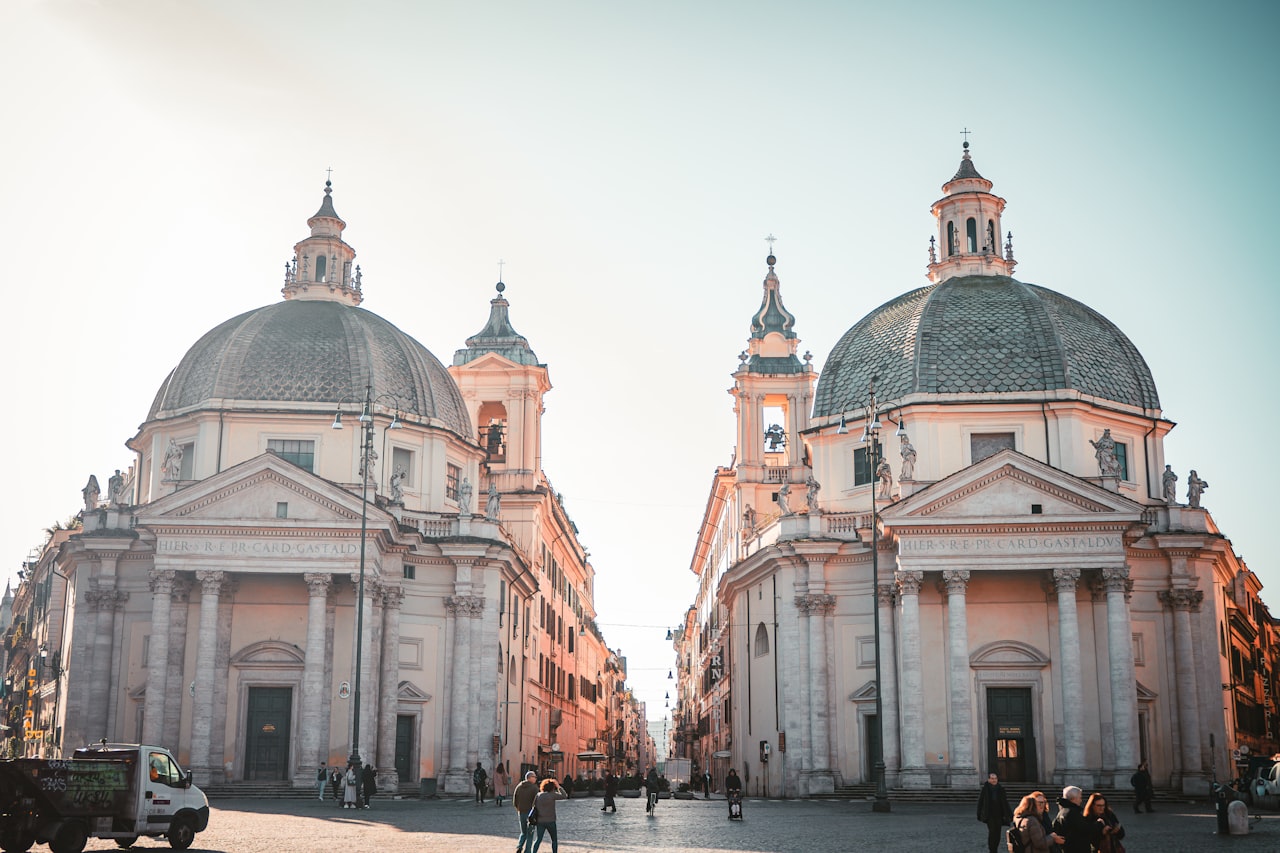 LandmarkPiazza del Popolo e la Terrazza del Pincio60 min
Rome's monumental northern gateway — a wide oval piazza framed by an Egyptian obelisk brought here in 1589 and Carlo Rainaldi's baroque 'twin' churches, their domes deliberately mismatched (one oval, one round) to disguise the piazza's uneven proportions. A ramped, switchback path Giuseppe Valadier built on the eastern side climbs to the Pincio Terrace, where crowds gather every clear evening for a free view over the piazza's rooftops to St Peter's dome — arrive at least an hour before sunset for a spot at the railing. Both the piazza and the terrace are free, always open and wheelchair-navigable via Valadier's ramp (paved, no stairs required); the flower-sellers working the piazza can be persistent, so a polite no is normal.
landmarkviewpointsunset - 09:30~10 min walkroute
- 09:4510:15
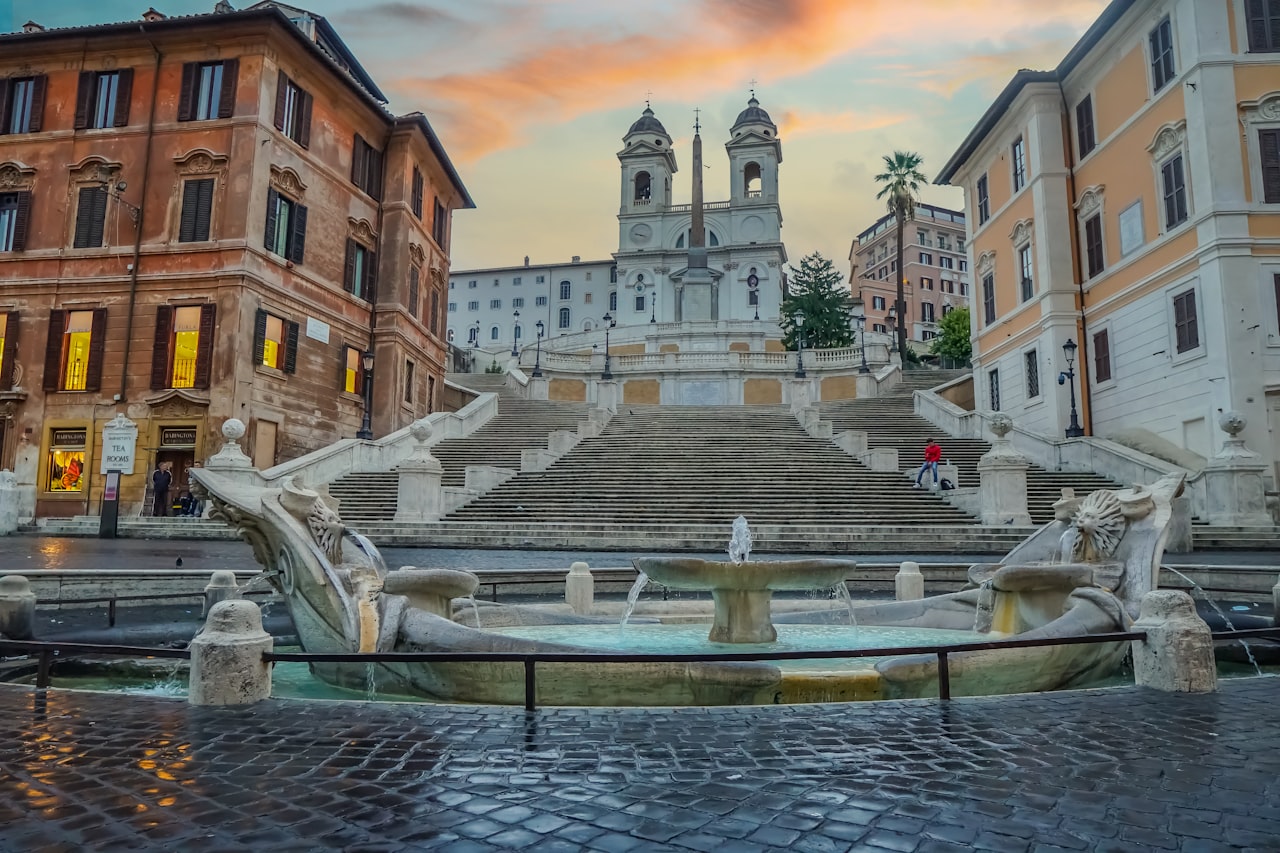 LandmarkScalinata di Trinità dei Monti30 min
Rome's most photographed staircase — 135 travertine steps built in 1725 with French funding, linking Piazza di Spagna below to the twin-towered church of Trinità dei Monti above. A 2019 city ordinance bans sitting or lying on the steps: expect a €250 fine just for perching, rising to €400 if you damage or stain the stone — whistle-blowing officers patrol by day and the rule is still strictly enforced. At the base, Bernini's father carved the boat-shaped Fontana della Barcaccia, sunk low because of weak local water pressure. The steps themselves have no ramp; wheelchair users can reach the top via the elevator at Spagna metro station instead, while the piazza below is flat and step-free.
landmarkmust seephoto spot - 10:15~15 min walkroute
- 10:3012:00
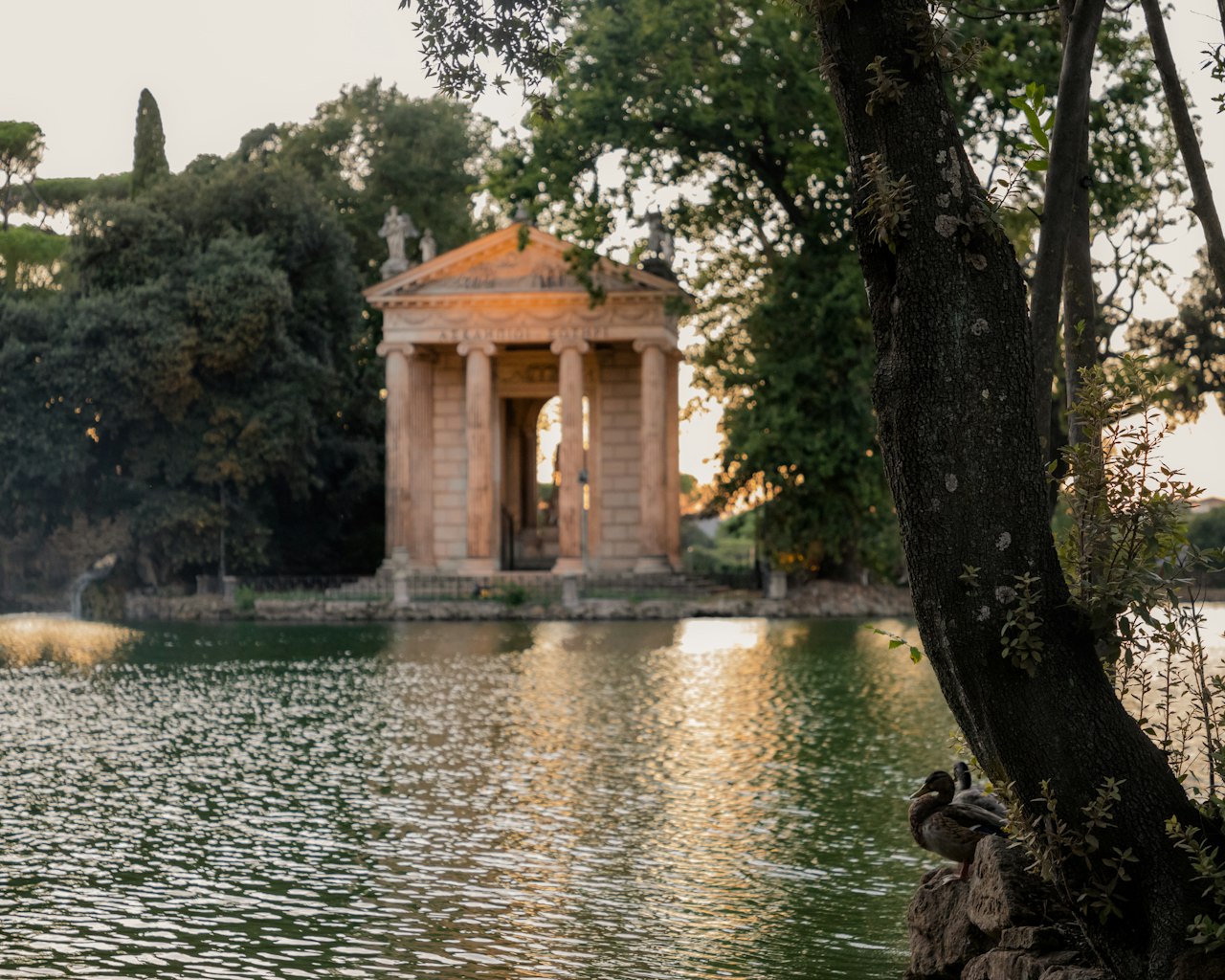 ParkVilla Borghese90 min
Rome's grandest public park — 80 hectares of shaded avenues, formal gardens and a small artificial lake where you can rent a rowboat (roughly €3–5 per person for 20 minutes, minimum two people) to row past the neoclassical Temple of Asclepius. The park is free and unenclosed by any single gate — main paths are paved and wheelchair-navigable — though it holds several separately-ticketed attractions inside: the Galleria Borghese, the Bioparco zoo (adults €16, children 3–12 €13), and the Pincio Terrace viewpoint. A natural pairing for families: let kids loose at the Bioparco or the lake while adults take a timed slot at the low-child-appeal Galleria Borghese nearby. Bike and golf-cart rentals are available near the main entrances for covering more ground.
Step-freeparkgardensfamily friendly - 12:00~10 min walkroute
- 12:1513:15LunchSuggested
- 13:1515:15
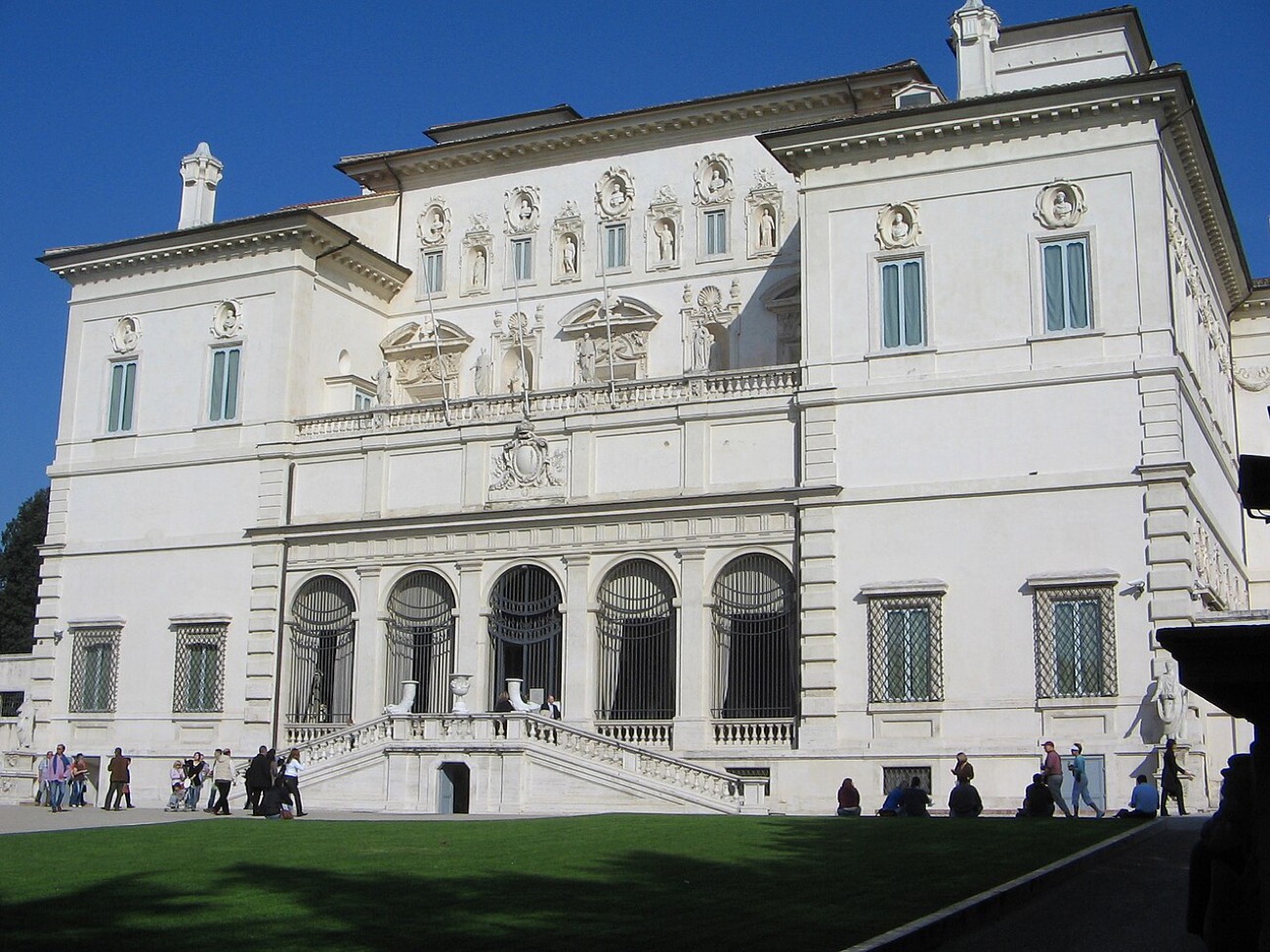 Gallery120 min
One of Rome's richest small museums — Bernini's Apollo and Daphne and David, plus Caravaggio and Titian canvases, all inside Cardinal Scipione Borghese's 17th-century villa. Visits are strictly capped: book a fixed 2-hour entry slot in advance (there is no walk-up ticketing), with online booking opening only about 10 days ahead of a visit date and popular slots — especially spring and autumn mornings — selling out within hours of release. The ticket is €18 total (€16 admission plus a mandatory €2 reservation fee, charged on every ticket including reduced and free ones); arrive 30 minutes early for the mandatory bag check, and be ready to leave promptly when your 2 hours end — there's no re-entry and no extensions. Closed Mondays. A side entrance and small elevator-compatible wheelchairs make the ground and first floors accessible, per the gallery's own accessibility page.
Cards OKStep-freegalleryart museumclosed this day — verify before going - 15:15Transit ~15–25 minroute
- 15:3016:30
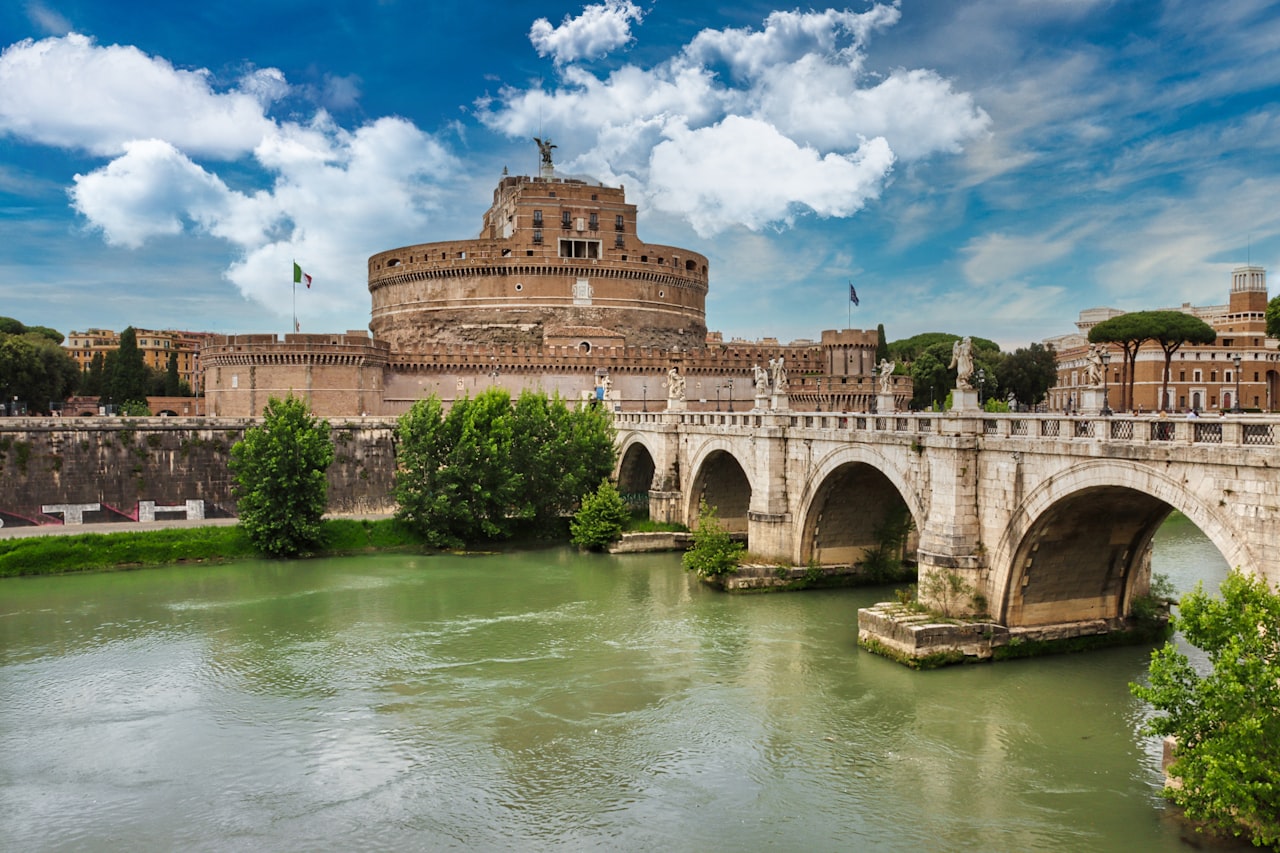 Historic site60 min
Hadrian's 2nd-century mausoleum, later a papal fortress and prison, now a museum — the climb up through the Sala Paolina and the papal apartments ends on a rooftop terrace with one of the best skyline-and-river views in Rome, especially near sunset. Adult ticket €18, reduced €2 for EU citizens 18–25, free on the first Sunday of the month. Closed Mondays year-round, with one exception: a 'Mondays in the Castle' initiative (August–December 2026) opens the museum 14:00–20:00 that day for a flat €5. It's an old fortress, so accessibility is only partial — an assisted lift reaches most levels but needs a staffed escort arranged at the dedicated accessible entrance on Lungotevere Castello, not a free-roam route.
historicallandmarkmuseumclosed this day — verify before going - 16:30~5 min walkroute
- 16:4517:00
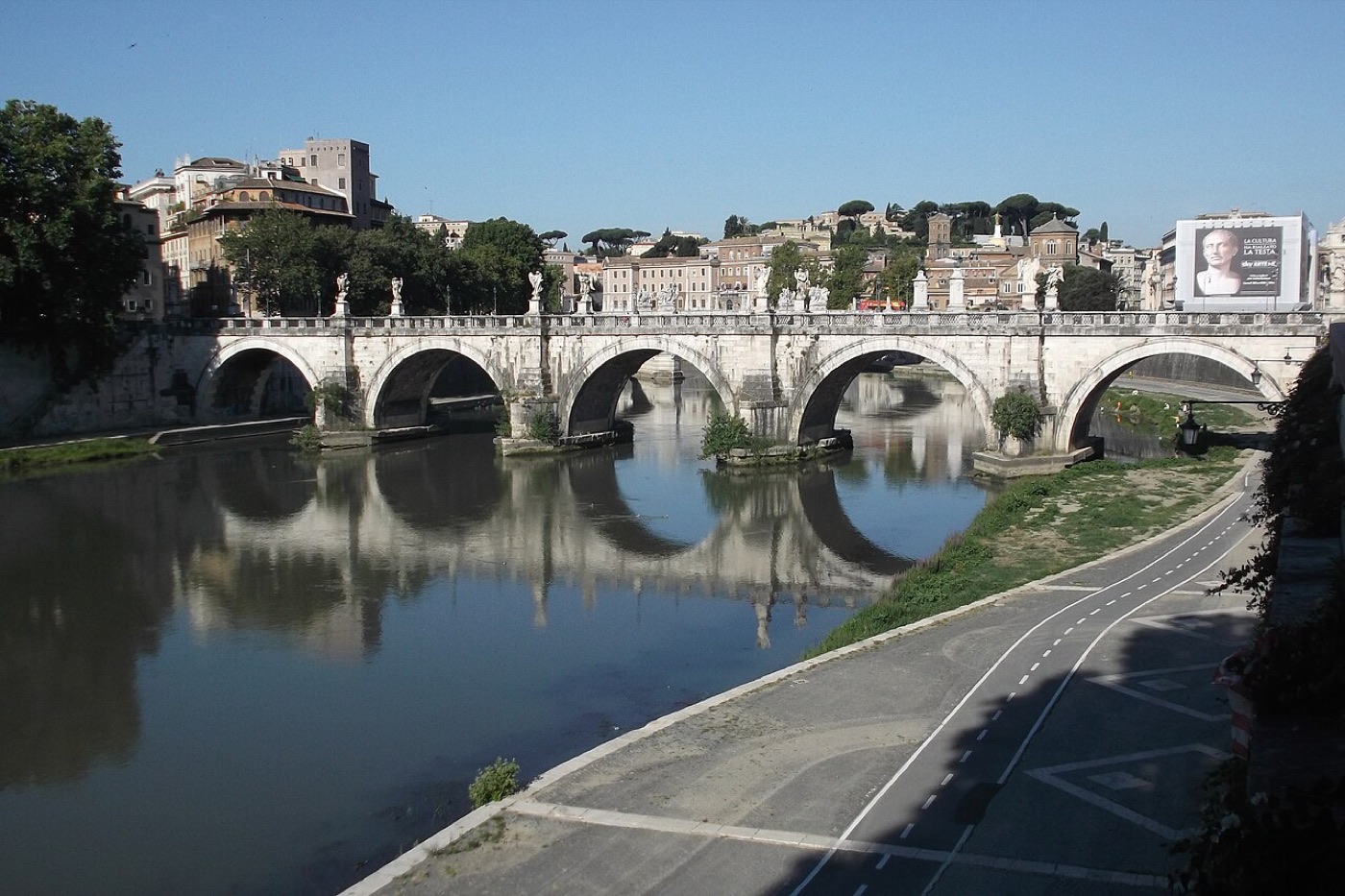 Landmark15 min
The pedestrian-only approach to Castel Sant'Angelo, lined with ten marble angels — each carrying an instrument of the Passion — carved in Bernini's workshop in the 1660s (two originals now live in a church nearby, replaced here by copies). Free, always open, and one of the best places in Rome to frame the castle against St Peter's dome, especially at golden hour. The old stone paving underfoot is uneven in places, worth noting for wheelchairs or strollers.
river viewstatuesfree - 17:00~15 min walkroute
- 17:1518:15
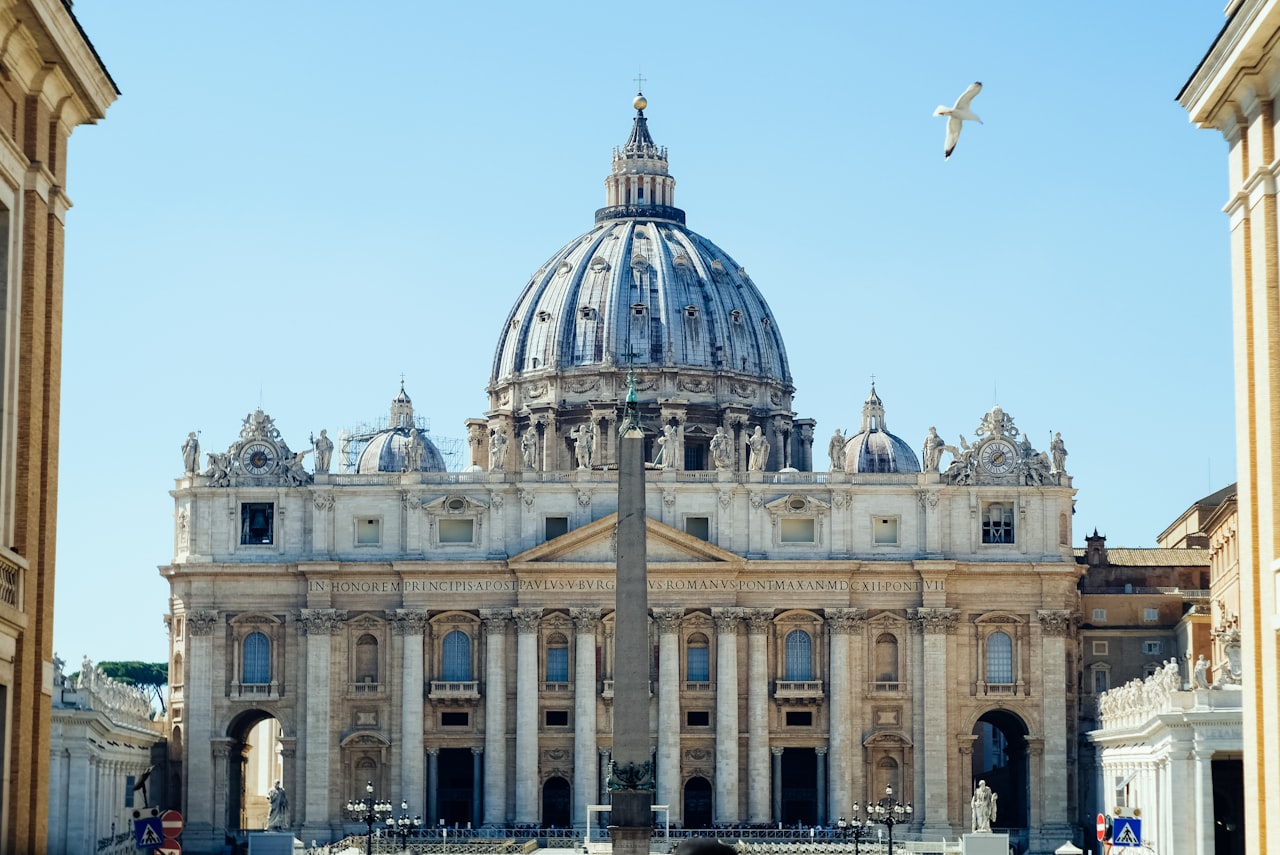 ChurchBasilica di San Pietro60 min
Free to enter, no ticket needed — but the security screening line (bags scanned, metal detectors, the dress code enforced right at this checkpoint) regularly runs 1–2 hours by mid-morning in high season. Arrive before 08:00, or plan around it entirely with an early Mass. Shoulders and knees must be covered for everyone, long trousers for men, skirts below the knee or trousers for women — guards turn people away with no exceptions, so pack a cover-up even in August. Inside, the dome climb (up to 551 steps) costs €10 on foot or €15 with a lift partway, still leaving roughly 320 steps to the summit — the lift only reaches the lower terrace. The main basilica floor is step-free via a ramp near the security checkpoint and an elevator, though the dome's very top isn't wheelchair-reachable.
Step-freechurchmust seelandmark - 18:3019:45DinnerSuggested


Alternatives for Day 3
Swap something out, or add another verified stop nearby — 2 available
Rome's oldest gelateria, scooping since 1890 and once supplier to the Italian royal family — the marble counters and gilt mirrors haven't changed much since, and neither has the queue, which is the honest trade-off for genuinely artisan-made gelato rather than the industrial tubs sold at some Pantheon-area shops. Order and pay at the register first, then take the receipt to the counter to choose flavours; fruit sorbetto flavours are typically dairy-free. Expect €3–10 depending on size, and go a little later in the evening if the midday line looks daunting — it's open until 1:30am daily.
A family trattoria a few steps from the Pantheon, run by the Gargioli family since 1961 and now in its third generation — Michelin's Bib Gourmand and a regular spot on the '50 Top Italy' list, so book a table days ahead (it fills up fast, especially for dinner). The carbonara and amatriciana are the draws, alongside offal classics like coda alla vaccinara; a dedicated vegetarian menu runs alongside them. Expect €60–70 a head with wine — pricier than a typical trattoria, which the queue outside confirms. Closed Saturday evenings and all day Sunday, plus a stretch in August.
Naples · 3 days
Stay near Centro Storico & Spaccanapoli Hotels on Klook ↗
Posillipo — a park day
The ridge west of Mergellina where Naples turns quiet and green — a clifftop park with the whole gulf laid out below, a fishing hamlet whose little window inspired the city's best-loved song, and a sunken Roman villa now a protected cove. No metro reaches it; you get here by the coast bus or a taxi, and that detachment is most of the point.
- 09:4010:00Check out of your stayUsually due by 10:00–12:00 — most stays hold your bags if you ask.
- 10:0012:21Train2h 21mArriveRoma TerminiNapoli Centrale (Piazza Garibaldi)
- 12:2112:51Drop your bags at your stayRooms usually open from 15:00 — leave luggage and start exploring.
- 12:5113:51LunchSuggested
- 13:5114:36ParkParco Virgiliano (Parco della Rimembranza)45 min
A 70,000-square-metre clifftop park on the most advanced rocky spur of Posillipo hill, opened 1931 and also called Parco della Rimembranza (a WWI war memorial) — the wide terraced walkway looks straight down onto the gulf, Capri, the Sorrento peninsula, Ischia, Procida, Nisida and Vesuvius, and is one of the best sunset spots in Naples. Free entry, two gated entrances (Viale Virgilio and Via Tito Lucrezio Caro). Open daily 07:00-21:00 in summer (21 June-30 September); hours stretch later, to midnight, from 1 May-20 June, and stay similar in winter with a later 22:00 weekend closing — the posted board at the gate has the current cut-off. The main terraces are paved and level enough for a stroller, but there's no official confirmation of full wheelchair access across the whole park, and some visitors have flagged patchy upkeep of the lawn and play equipment — go for the view, not a polished city park. No metro reaches it; take bus 140 or C21 along Via Posillipo, or a taxi.
parkviewpointpanorama - 14:36~15 min walkroute
- 14:5115:36LandmarkMarechiaro45 min
A tiny fishing hamlet at the foot of Posillipo, famous for 'a fenestella — a small window in a seaside house that Salvatore Di Giacomo immortalised in his 1885 song 'Marechiare' ('quanno spunta la luna a Marechiare...'), still sung as one of Naples's signature classics. From Via Marechiaro, a steep, narrow lane drops down past bougainvillea-covered walls to the little harbour, where wooden boats can be hired for a short trip along the coast to see Palazzo Donn'Anna and the Gaiola cove from the water. The descent is uneven stone paving with steps in places — not workable for wheelchairs or a stroller. No set hours or gate, but come in late afternoon for the light that gave the place its name ('mare chiaro', clear sea). A handful of seafood restaurants cluster at the harbour.
viewpointpanoramafishing village - 15:36~10 min walkroute
- 15:5117:21ParkParco Sommerso di Gaiola90 min
A protected marine area around the tiny Gaiola islet, with the sunken and shoreline ruins of the Roman-era Pausilypon villa visible in the clear water. Entry is free but a reservation is mandatory year-round (book at areamarinaprotettagaiola.it) — a maximum of 200 people a day, sometimes fewer. Summer (May-September) access runs in two shifts, roughly 09:00-13:00 and 14:00-18:00; winter hours are shorter (check the site month by month) and same-day walk-up registration is possible if capacity allows. The site closes on bad-weather days — check the Campania civil-protection alerts before setting out. The only way down is a roughly 150-step staircase on Discesa Gaiola, descending then climbing back up — not workable for wheelchairs, strollers, or anyone with significant mobility limits. If you'd rather skip the stairs and the booking, the islet and cove are also clearly visible (and photographable) from the clifftop road above.
parkviewpointsnorkeling - 17:3618:51DinnerSuggested
Centro Storico & Spaccanapoli & nearby — a sights day
The UNESCO core, cut by the dead-straight Greek street everyone calls Spaccanapoli — churches with astonishing sculpture, a subterranean city beneath your feet, and the pizzerias that made the form famous, all within a few noisy blocks.
- 08:3009:00BreakfastPick a spot nearby — not booked yet
- 09:0010:00ChurchCattedrale di Santa Maria Assunta (Duomo di San Gennaro)60 min
The cathedral nave is free to enter (roughly 08:30-13:30 and 14:30-19:30 Mon-Sat, shorter and shifted on Sunday) and holds the Baptistery of San Giovanni in Fonte, the oldest baptistery in the Western world. The real draw for most visitors is separate: the Royal Chapel of the Treasure of San Gennaro, off the right nave, and its adjoining museum, which need their own small ticket and run on their own hours (around 09:30-18:00 daily) — buy online ahead in peak season. Twice a year (the Saturday before the first Sunday in May, and 19 September) huge crowds gather for the ceremony where San Gennaro's dried blood relic is said to liquefy; expect the piazza and nave to be packed on those dates. Shoulders and knees covered, as at any Italian cathedral.
Cards OKStep-freemust seechurch - 10:00Transit ~15–25 minroute
- 10:1511:15Historic siteCatacombe di San Gennaro60 min
Naples' oldest Christian burial site, cut into the tuff hillside since the 2nd century and named for the bishop-martyr (later the city's patron saint) buried here before his relics moved to the Duomo. Entry is guided-tour only, departing roughly hourly 10:00-17:00 (last tour), closed Wednesdays; full ticket €9, reduced €5, and it also covers the Catacombs of San Gaudioso (below Santa Maria della Sanità) free within a year. The dedicated wheelchair-accessible entrance at Vicoletto San Gennaro dei Poveri has been closed since a hillside maintenance issue — call ahead if step-free access matters, since the standard route involves stairs. Book online a few days ahead in high season; the meeting point is the ticket office at Via Capodimonte, 13.
Cards OKcatacombsguided tourbook aheadclosed this day — verify before going - 11:15Transit ~15–25 minroute
- 11:3012:30ChurchComplesso Monumentale di Santa Chiara60 min
The 14th-century Poor Clares monastery's real showpiece is the Chiostro Maiolicato — a cloister garden that Domenico Antonio Vaccaro re-dressed in 1742 with hand-painted majolica tiles and pergolas depicting Neapolitan country life, a striking calm break from the noise outside. Tickets are sold only at the on-site ticket booth (no advance online booking as of this writing), and last entry is 30 minutes before closing — note Sunday's short 10:00-14:30 window. The basilica itself was heavily rebuilt after WWII bombing damage. The path around the cloister's outer walkway is flat and paved, but the raised central path through the garden is reached by a single step of about 30cm.
must seechurchhistorical - 12:30~5 min walkroute
- 12:4513:45LunchSuggested
- 13:4514:30MuseumCappella Sansevero45 min
Home to Giuseppe Sanmartino's Veiled Christ, a single block of marble carved to look like a translucent shroud over the body beneath it — reason enough on its own to come to Naples. Every visit is a timed slot and must be booked online in advance; walk-up entry is not possible and slots regularly sell out weeks ahead in high season, so book as early as the 60-day release window allows. Arriving more than 15 minutes late forfeits the slot. No photography is permitted inside. Closed every Tuesday. Wheelchair users can reach the main chapel and sacristy where the Veiled Christ stands, but the underground crypt holding the Anatomical Machines is down a narrow 19th-century spiral stair with no alternative access.
Cards OKStep-freemust seebook ahead - 14:30~5 min walkroute
- 14:4516:15Historic siteNapoli Sotterranea90 min
You cannot walk this on your own — every visit is a guided tour (about 1h30, departing roughly hourly from 10:00 to 18:00, in Italian and English), down 40 metres into the Greek-quarried, Roman-enlarged cistern and aqueduct network that once supplied the city and later doubled as a WWII air-raid shelter. Wear shoes you don't mind getting a little damp and bring a light layer — it's cool underground year-round. The descent is via long, narrow stone stairways with no lift or ramp, so it isn't workable for wheelchairs, strollers, or anyone with significant mobility limits; a couple of short passages also require briefly turning sideways. Book ahead in high season, tours can sell out.
Cards OKmust seebook aheadhistorical - 16:15~5 min walkroute
- 16:3017:15MarketVia San Gregorio Armeno45 min
A narrow, sloping lane of pastori (nativity figurine) workshops that has made hand-crafted presepe figures here since the 1700s — alongside the traditional shepherds and Holy Family you'll find the shop-window running gag of the year's celebrities and politicians recast as terracotta figurines. It's busiest and most magical in the run-up to Christmas, but the workshops sell year-round. Individual shop hours vary — some close for a couple of hours in the early afternoon or shut earlier on Sunday — and the lava-stone paving is uneven in places, worth knowing if pushing a stroller. Haggling a little on multi-piece purchases is normal; card machines are common but a few of the smallest stalls still prefer cash.
must seemarketartisan - 17:3018:45DinnerSuggested
Alternatives for Day 5
Swap something out, or add another verified stop nearby — 5 available
Widely called one of the most beautiful metro stations in the world — designed by Spanish architect Óscar Tusquets Blanco, opened 2012, with mosaic-lined descending tunnels and a light-filled cone plunging toward the platforms. The ticket-hall level near the entrances is free to look around, but reaching the platform level with the deepest mosaic sections requires a valid Metro Line 1 ticket (single ~€1.50 or day pass €4.50, covering all of Naples's art stations). Station hours are 06:00-23:00 daily. Elevators connect street level to the platforms but are notoriously prone to breaking down here — check the metro operator's app before counting on one if mobility is a concern, and budget extra time. Avoid 08:30-09:30 if you just want photos, when trains and platforms are at their most crowded.

A 13th-century Angevin fortress guarding the port, right by the ferry terminal. Open Monday-Saturday 09:00-18:00 (last entry 17:30), closed Sundays and holidays. Full ticket €15, €10 for Naples metropolitan-area residents, free under 18; pay by card at the desk or book online. Don't miss the Renaissance triumphal arch at the entrance and the Sala dei Baroni. From 27 May to 31 Aug 2026 an exhibition ('Cattivi pensieri') occupies the Palatine Chapel, the former Armory room and the Chapel of the Souls of Purgatory. Most exhibition halls and the courtyard are reachable via elevators and ramps, but the women's gallery above the Sala dei Baroni and the second-floor panoramic terrace are not step-free.

Opened in 1737, the oldest continuously active opera house in the world — decades older than Milan's La Scala or Venice's La Fenice. Two separate things to plan for: a 45-minute guided tour of the auditorium, royal box and foyers (from about €7, Mon-Sat 10:30-12:30 and 14:30-16:30, Sun morning only 10:30-12:30, book by phone or email a day or two ahead), or an actual opera/ballet performance (a separate, pricier ticket booked on the official site weeks ahead in season, evening start, smart dress recommended). Closed 25 Dec, 1 and 6 Jan, Easter Sunday and 15 Aug. Wheelchair users can reach the stalls via a ramp/tunnel entrance on Piazza Trieste e Trento and the boxes via a lift — call ahead to confirm and reserve one of the designated spaces.
On Piazza San Domenico Maggiore since 1905, the original branch of Naples' best-known historic pasticceria and the birthplace of the Ministeriale (a dark chocolate mignon with a liqueur-laced cream centre). Also does a strong sfogliatella riccia and frolla, babà, and pastiera in season — stand at the counter for an espresso and a pastry the way locals do, or take a box to go for a bench in the piazza outside. The sfogliatella dough here follows the traditional lard-based recipe, and the babà is soaked in rum, so neither is vegan or alcohol-free. Expect a queue at the counter around midday and early evening.
Gino Sorbillo's fried-pizza counter, named for the aunt who trained him, steps from Teatro di San Carlo and Gambrinus. Naples's classic pizza fritta: dough folded around a filling (ricotta, provola, tomato and often salami) and deep-fried to a golden crisp, around €3.50-5, with a version made without salami for a meat-free option. Open daily 11:00-22:00. It's mostly a grab-and-go window with a few stools rather than a sit-down restaurant, so don't plan a leisurely meal here — a dedicated vegan Margherita exists at Sorbillo's regular pizzerias, but isn't confirmed on this fried-pizza-only menu.
Vomero & nearby — an old-town day
The hill above the old city, reached by funicular — a star-shaped fortress and a Carthusian monastery looking straight down the bay to Vesuvius, with a leafy villa park and the city's calmest shopping streets behind them.
- 07:4008:00Check out of your stayUsually due by 10:00–12:00 — most stays hold your bags if you ask.
- 08:3009:00BreakfastSuggested
- 09:0010:30
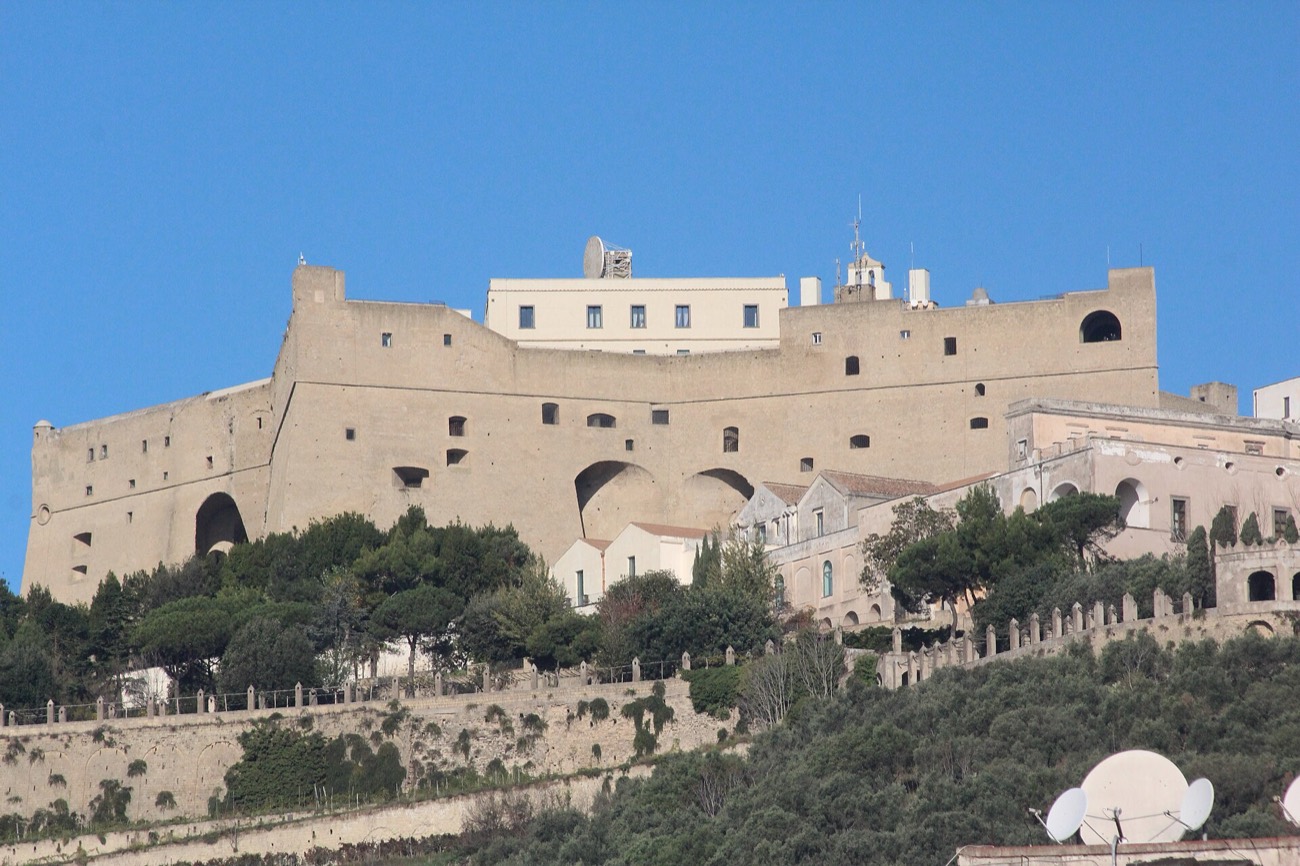 Historic site90 min
A 16th-century star-shaped fortress crowning the Vomero hill, with the best 360-degree panorama in Naples — the whole bay, Vesuvius, and on a clear day Capri, Sorrento and the Amalfi coast. The castle itself now opens daily 08:30-19:30 (last entry 18:30) with no weekly closure day, closed only 1 Jan and 25 Dec. The Museo del Novecento a Napoli inside it keeps separate hours — closed Tuesdays, 09:30-18:30 (last entry 17:30) — so check which part you want before you climb up. Ticket from about €7, or €9 combined with the Certosa di San Martino next door. Best visited before mid-afternoon for clear light; reach it by the Montesanto or Centrale funicular plus a short uphill walk. Bring some cash as backup at the ticket desk even though card payment is generally accepted at Italian state museums.
historicallandmarkviewpoint - 10:30~10 min walkroute
- 10:4511:00LandmarkFunicolare Centrale15 min
The busiest of Naples's four historic funiculars, running underground from Piazzetta Duca d'Aosta — right by Galleria Umberto I and Piazza del Plebiscito, at the foot of Via Toledo — up to Piazza Fuga in the heart of Vomero in about 3-4 minutes. Trains run roughly every 10 minutes at peak, every 30 minutes off-peak from 08:30. A single UnicoCampania ticket (about €1.30-1.50) covers this ride plus 90-100 minutes of onward travel including transfers, or buy a day ticket (~€3.50) if you're also using the Metro, the Toledo art station, or the other funiculars the same day. Runs Mon-Tue 07:00-22:30, and until around 00:30 Wed-Sun. Accessibility varies by station on Naples's older funicular lines — if mobility is a concern, check with ANM before relying on a lift being available.
funicularengineering heritagetransit hub - 11:00~20 min walkroute
- 11:2011:45Historic site25 min
A neo-Renaissance covered arcade built 1887-1890 as the centrepiece of Naples's post-cholera 'risanamento' rebuilding — a soaring glass-and-iron cross-vault over four intersecting streets, with the historic underground Salone Margherita theatre (opened 1890) tucked near the Santa Brigida entrance. Free to walk through at any time; the shops and cafes inside keep their own daytime hours. As part of an ongoing security and restoration project, gates were added at the Santa Brigida and Via Verdi entrances that now close nightly (roughly 22:00-06:00); the Via Toledo side stays open for continuous passage. Marble floors are flat and step-free at ground level, though it gets crowded and slippery when wet.
historicallandmarkmust see - 11:45~15 min walkroute
- 12:0014:00MuseumCertosa e Museo di San Martino120 min
A 14th-century Carthusian monastery turned museum right next to Castel Sant'Elmo, with an ornate baroque church, cloisters and hanging gardens that open onto the same sweeping bay views. The highlight for many visitors is the collection of 18th-century Neapolitan presepi (nativity scenes) with astonishingly detailed figurines. Open daily except Tuesday, 08:30-18:30 (last entry 17:30, extended from 1 July 2026). Ticket €6 alone, or €9 combined with Castel Sant'Elmo — buy the combined ticket if you're doing both, which most visitors do since they sit side by side. Allow a full 90 minutes to two hours; the cloisters alone are worth lingering in.
museummonasterychurch - 14:00~15 min walkroute
- 14:1515:15ParkVilla Floridiana e Museo Duca di Martina60 min
A neoclassical park laid out in 1817-19 for the Duchess of Floridia, second wife of Bourbon king Ferdinand I, with English-style landscaping and sweeping bay views. Two entrances: Via Domenico Cimarosa 77 and Via Aniello Falcone 171. Free to enter daily from 09:00 until about an hour before sunset (roughly 19:30 in midsummer, earlier in winter — check the posted closing time, which shifts through the year); reduced hours 09:00-14:00 on 24, 26 and 31 Dec, Easter and 15 Aug; closed 25 Dec, 1 Jan, Easter Monday and 1 May. Inside the park, the Museo Duca di Martina (a fine Oriental and European ceramics/decorative-arts collection) costs €4 (€2 reduced, free under 18 and on the first Sunday of each month) and, since 1 July 2026, closes Tuesdays, open 09:30-18:30 (last entry 17:30) other days. The park's paths are on a hillside with some slopes and steps.
parkgardenmuseum - 15:15Transit ~15–25 minroute
- 15:3017:00Historic sitePalazzo Reale di Napoli90 min
The former royal residence of Spanish viceroys and Bourbon kings, facing Piazza del Plebiscito. Open Thursday-Tuesday 09:00-20:00 (last entry 19:00), closed all day Wednesday and on 1 Jan, 25 Apr, 1 May and 25 Dec. Full ticket €15 (reduced €2 for EU citizens 18-24, free under 18); an evening-special reduced ticket (€5) applies close to closing. The internal courtyards and the Museo Pignatelli's carriage atrium are free to enter without a ticket. Elevators reach both the museum floor and the rooftop Hanging Garden, and the palace runs a dedicated accessibility service (wheelchairs, tactile itineraries, Italian Sign Language videos) bookable ahead by phone. Some visitors have flagged patchy upkeep in a few rooms and the roof garden — go for the state apartments and the view over the bay rather than expecting museum-perfect polish throughout.
Cards OKStep-freehistoricallandmark - 17:3018:45DinnerSuggested

Alternatives for Day 6
Swap something out, or add another verified stop nearby — 5 available
The elegant hinge between the seafront and the shopping streets — a column topped with a lion monument marking Naples' 19th-century uprisings sits at the centre of the square, ringed by grand 19th-century palazzi. Via Chiaia, the pedestrian shopping street leading off it towards Via Toledo, and Via dei Mille/Via Filangieri leading the other way towards Villa Comunale, together form the city's main luxury and mid-range retail stretch — calmer and more residential than the noisier centro storico shopping. Entirely free and open around the clock as a public square and street; flat, paved and step-free throughout. Best in the early evening when the passeggiata crowd comes out and the cafés fill their outdoor tables.
The flat, waterfront stretch running from Piazza Vittoria towards Mergellina, closed to cars since the mid-2010s 'Lungomare Liberato' initiative — one of Italy's earlier and most successful pedestrianizations of a coastal road, now full of joggers, cyclists, families and sunset crowds with Vesuvius across the bay. Its eastern neighbour, Via Partenope (towards Castel dell'Ovo), is mid-upgrade too as of summer 2026: a temporary traffic scheme from 29 June-29 August 2026 closes it to cars nightly 18:00-6:00 and all weekend, plus active cycle-pedestrian works between Piazza Vittoria and the Via D'Aquino steps — expect some detours and construction noise on that stretch through the summer. The promenade itself is flat, paved and fully step-free, with benches and gelato kiosks along the way. Free, always open, no ticket.
The world's essential collection for anyone who's seen or is heading to Pompeii and Herculaneum — most of what those sites' excavations turned up (mosaics, frescoes, bronzes, the Farnese Hercules and Bull) lives here, not on-site. Open daily 9:00-19:30 (last entry 18:30) except Tuesday; full ticket €20, reduced €2 for EU/EEA visitors 18-25, free under 18 and on the first Sunday of the month (though the Gabinetto Segreto closes on free-admission days for security reasons). The Gabinetto Segreto — a room of frankly erotic Roman antiquities from Pompeii, on open display since the 2000s — requires visitors under 14 to be accompanied by an adult. The museum is wheelchair accessible via elevators between wings, but the Egyptian collection in the basement is reachable only by stairs. Budget a genuine two hours minimum; book online to skip the queue.
A beloved, intimate wine bar tucked into a narrow vico just off Via Chiaia, running since the late 1990s — exposed brick, a wall of bottles, and a genuinely serious by-the-glass list at fair prices, paired with cheese and cured-meat boards, bruschette and crostoni. Vegetarian and vegan boards are offered alongside the classics, and gluten-free/lactose-free options are available too. Hours run long: Monday-Thursday 9:30-13:30 and 16:30-midnight, Friday-Saturday 9:30-13:30 and 16:30-2:00, Sunday evenings only 18:30-midnight — but the real atmosphere is an evening one, busiest from about 19:00. It's one of several similar wine bars clustered on the same short street (Lo Chandelier is a few doors down) — this is the classic anchor of the block. Cards are accepted. It is one small room down a narrow vico, so it fills fast after 20:00 — come early or expect to stand with your glass outside.
Europe's oldest public aquarium, opened in 1874 as part of a still-active marine research institute inside Villa Comunale park — about 30 tanks stocked with species native to the Gulf of Naples itself, plus the small Darwin-Dohrn science museum included on the same ticket. Its opening days have changed more than once and public listings still contradict each other, so confirm on the official site before making the trip: at present it opens weekends only, 10:00-19:45 (last entry 19:00), around €7 full and €5 reduced, with advance booking required. Given the conflicting reports, confirm the day and price before building a visit around it — if it's shut, Villa Comunale itself (free, always open, the same seafront park) is a solid fallback with a pleasant walk and playgrounds.
Make this trip yours
Start from this exact itinerary, or build your own from scratch — free and offline-ready.