Nara奈良
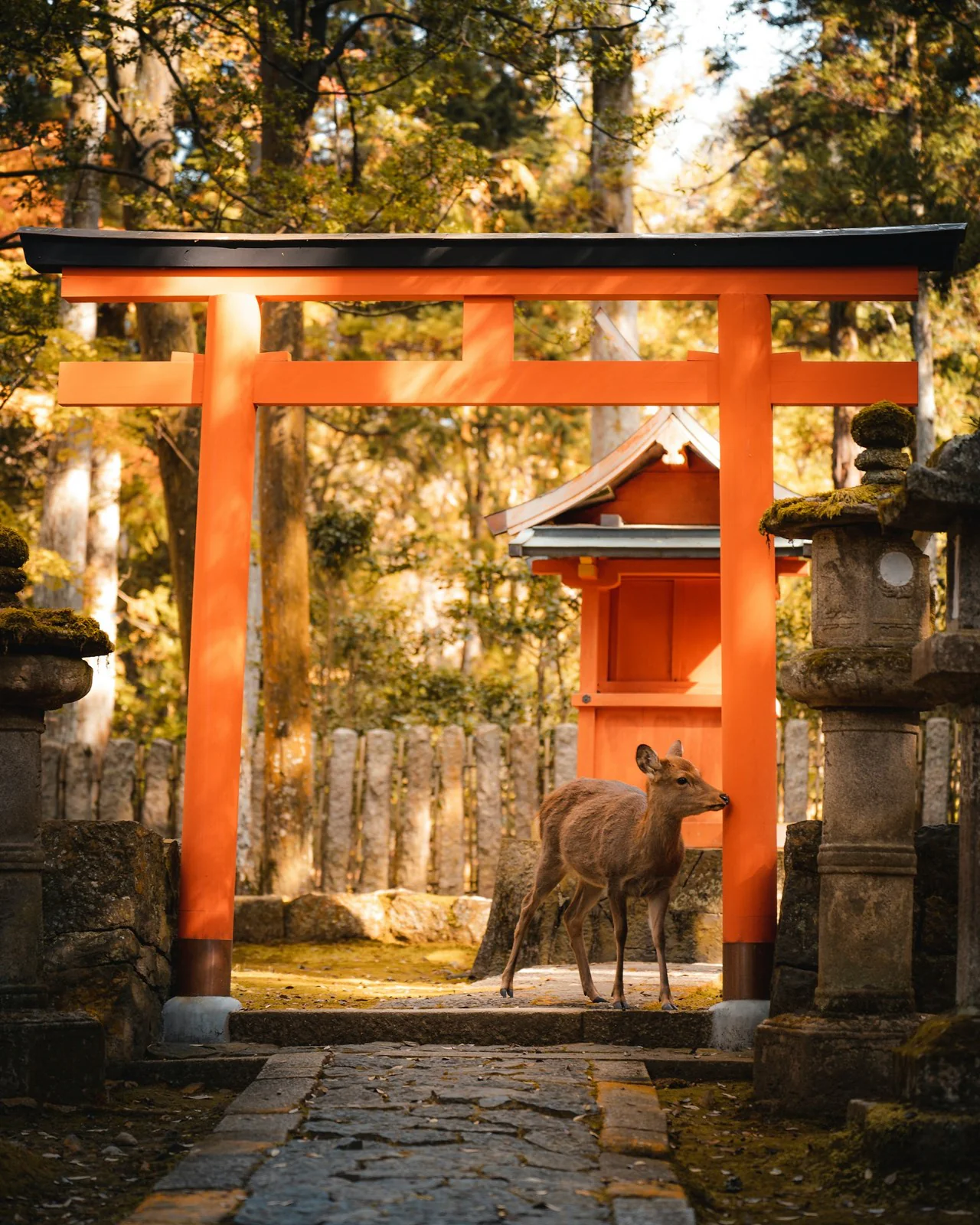
Japan's first permanent capital — a compact, walkable city of giant temples, free-roaming deer and an old merchant quarter. Easily done as a day from Osaka or Kyoto, but a calm overnight rewards early mornings at the temples.
Temples Deer History Day trip
Verified highlights
Horyu-jiTemple
Step-free
Japan's first UNESCO World Heritage site and home to the world's oldest surviving wooden structures (c.
Nakatanidou (mochi)Food
Vegetarian options Vegan options Alcohol-free
Famous for its lightning-fast 'high-speed mochi pounding' shows; grab a fresh warm yomogi-mochi at the Higashimuki arcade corner.
Todai-ji (Great Buddha)Temple
Step-free
The vast wooden hall housing Nara's 15-metre bronze Great Buddha — one of the world's largest wooden buildings.
Shizuka (kamameshi)Food
Vegetarian options Vegan options Cards OK
Long-loved kamameshi (iron-pot rice) cooked to order — a satisfying Nara Park lunch.
Naramachi Old TownLandmark
Step-free
A grid of preserved merchant townhouses turned into cafés, craft and sweets shops and tiny museums; look for the red 'migawari-zaru' monkey charms hanging from the eaves.
Sobakiri YoshimuraFood
Cash only
A small handmade-soba counter between Yakushi-ji and Toshodai-ji, milling its own 100% buckwheat and serving a seasonal tempura set.
Yu Nakagawa (Nakagawa Masashichi)Shopping
Cards OK
Flagship of the 300-year-old Nakagawa Masashichi house — beautifully designed hemp textiles, tenugui cloths and Japanese crafts; the premier Nara gift stop.
Mizuya Chaya (teahouse)Food
Vegetarian options Cash only
A picture-perfect thatched-roof teahouse tucked among the trees on the path to Kasuga Taisha, serving warabi-mochi, oden and amazake amid roaming deer.
Neighbourhoods
Nara Park & Todai-ji
The green heart of Nara: the Great Buddha hall of Todai-ji, the lantern paths of Kasuga Taisha, Kofuku-ji's pagoda and a garden or two — all set in a wide park where tame deer roam (and bow for crackers). A full, mostly-flat walking day.
Naramachi
The old merchant quarter just south of the park — narrow lanes of lattice-fronted machiya houses now full of cafés, craft shops, small museums and the Gango-ji temple. A relaxed afternoon of browsing and snacking.
Nishinokyo
The western temple district: the twin-pagoda Yakushi-ji and the serene Toshodai-ji, both UNESCO-listed, set among rice fields a short Kintetsu ride from the centre. A quieter half-day for temple lovers.
Ikaruga (Horyu-ji)
A rural town southwest of the city built around Horyu-ji — the world's oldest surviving wooden buildings — and the gentle Chugu-ji. A half-day pilgrimage for temple and history lovers, ~15 min by JR from Nara plus a short bus or walk.
Where to stay
Nara Park & Todai-ji
Right by the deer park and the big temples — best for early-morning and evening visits before the day-trippers arrive.
Naramachi
Charming old-town stay among lattice houses, cafés and craft shops, a short walk from both stations and the park.
Some links may earn hi tabi a commission, at no extra cost to you.
Getting there
Kintetsu Nara Station
Closest to Nara Park — Kintetsu limited express ~40 min from Osaka-Namba, ~45 min from Kyoto.
JR Nara Station
JR Yamatoji line ~50 min from Osaka, JR Nara line ~45 min from Kyoto.
Kansai International Airport (KIX)
~90 min via the airport limousine bus or rail (transfer at Osaka).
FAQ
Nara from Osaka or Kyoto — how, and is half a day enough?
The Kintetsu line is the fastest way in from both cities and lands you closer to the park than JR. Half a day covers Todai-ji and the deer park at a rush; a full day lets you add the lantern paths of Kasuga Taisha and the old Naramachi merchant quarter without hurrying.
Are the deer in Nara safe?
They're wild but habituated — fine to walk among, pushier the moment you buy shika senbei crackers. Feed with open palms, don't tease, and keep paper and maps out of reach; the deer bow, but they also bite pockets.
Is Todai-ji wheelchair accessible?
Yes — the approach and the Great Buddha hall are step-free, and Nara Park's main paths are flat gravel that copes with wheels. tabi's catalog verifies step-free access per place, so the day plan can stay fully accessible.
How up to date is this information?
Every place in the catalog is human-checked, and volatile facts — opening hours, closures, payment — sit on a quarterly re-verification cycle. Plans and pages are regenerated with every site release, so what you read reflects the current catalog.