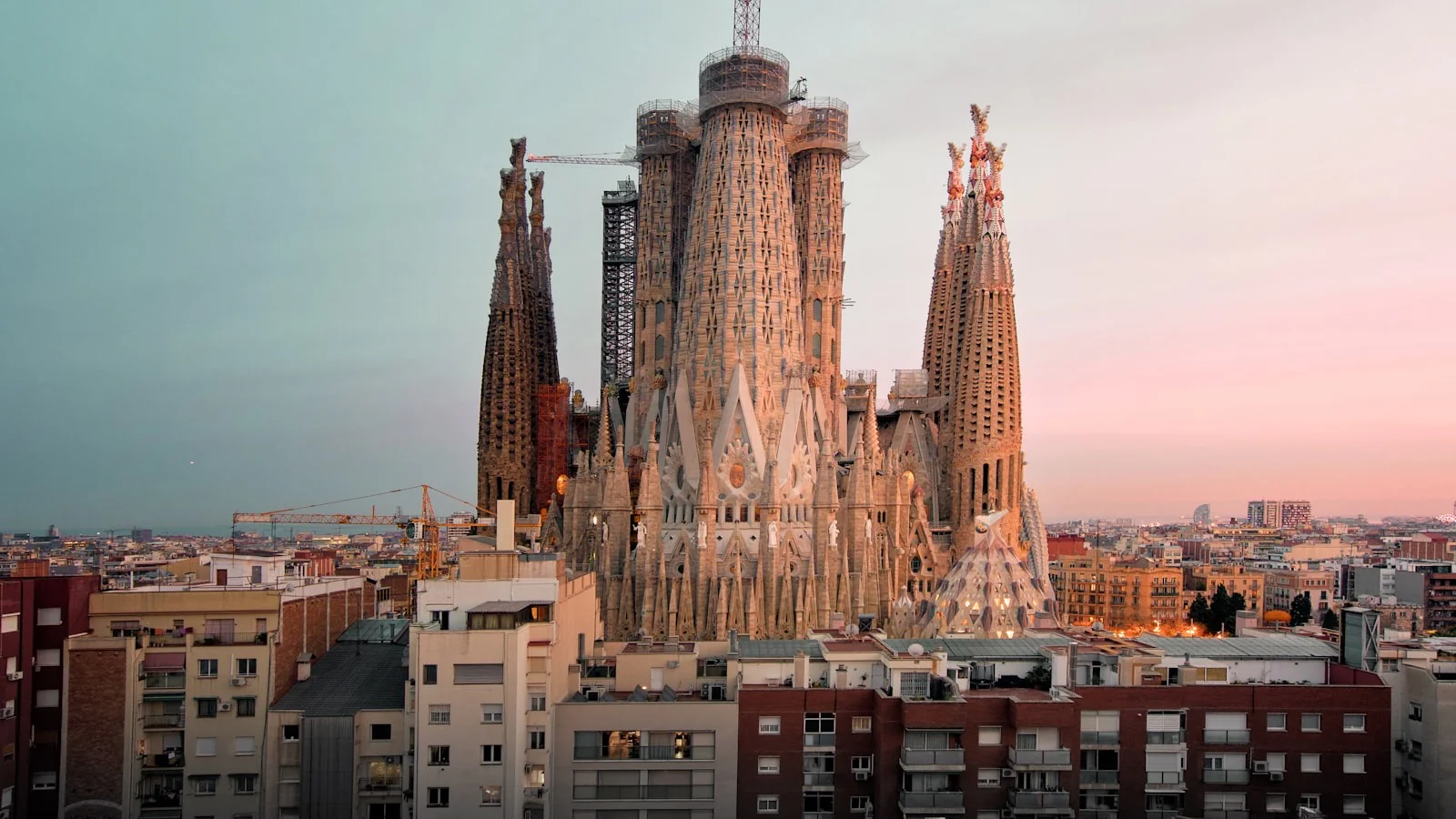
Barcelona
A medieval port city with Gaudí grafted onto it and a beach at the end of the metro line — Gothic alleys on one side of the grid, Modernista façades on the other, and Montjuïc's museums looking down on both. Catalan is the working language and the eating clock runs late: lunch at two, dinner after nine.
Architecture Art Food Couples Beach
Verified highlights
Casa BatllóMuseum
Step-free
General Visit tickets start from 29 euro online, with a discount for buying ahead of the box office price — book in advance.
La Cova FumadaFood
Vegetarian options Cash only
No sign outside, a handful of stools, and the birthplace of the bomba — Barceloneta's fried potato-and-meat croquette, served here since 1944 with its original spicy sauces.
Museu PicassoMuseum
Cards OK
Closed Mondays.
Quimet i QuimetFood
Vegetarian options
Fifth-generation family bar since 1914, and the honest answer when someone asks where to eat well near Montjuïc — the hill itself is genuinely thin on good food, and this is a 10–15 minute walk down into Poble-sec rather than something on the hill.
Palau de la Música CatalanaLandmark
Cards OK
A UNESCO World Heritage Modernista concert hall (Lluís Domènech i Muntaner, 1908) that most visitors can only see on a guided tour of about 50 minutes, timed through the day — the interior is not open for casual walk-in browsing the way a museum is.
La Vinateria del CallFood
Vegetarian options Vegan options
A candlelit wine bar tucked into a narrow lane of the old Jewish quarter (El Call), a couple of streets from the cathedral and worlds away from the Rambla-facing tourist rooms.
Casa Milà (La Pedrera)Museum
Step-free
The 'La Pedrera Essential' ticket starts from 29 euro online; a Sunset visit and separate Night Experience (with a show among the chimneys) also run seasonally.
Can RosFood
Vegetarian options
The Cid family has run this tavern since 1908, and its own tagline says exactly what it is: vermut, tapes i arrossos — vermouth, tapas and rice dishes.
Neighbourhoods
Barri Gòtic
The medieval core — a cathedral with geese in its cloister, Roman wall fragments built into apartment blocks, and lanes narrow enough to lose the sun at noon. Also the most pickpocketed square kilometre in the city.
El Born & la Ribera
The old merchants' quarter, now the best-eating one — Picasso's early work along a single medieval street, a basilica the shipwrights paid for, and a park where the citadel used to stand.
L'Eixample
Cerdà's grid, and the reason people book flights — Gaudí's unfinished basilica at one end, his rippling apartment houses along Passeig de Gràcia, and chamfered corners that make every junction a small plaza.
Gràcia & Park Güell
A separate town until 1897 and it still behaves like one — car-light squares where people actually sit, and above them the mosaic terrace Gaudí built for a housing estate nobody bought.
Montjuïc
The museum hill above the port, reached by funicular or cable car — Catalan Romanesque frescoes rescued from mountain churches, a Miró foundation built for the light, and a castle with the whole city laid out beneath it.
Barceloneta & Port Vell
The fishermen's grid turned beach quarter — a working marina at one end, four kilometres of sand at the other, and paella eaten at plastic tables with the sea in view.
Where to stay
L'Eixample
The safest first-visit base — wide Modernista blocks, metro everywhere, and a flat walk down into the old city.
El Born & la Ribera
Best for eating and evenings — tight medieval streets full of bars and small restaurants, minutes from the beach and the Gothic quarter.
Gràcia & Park Güell
Village-scale and residential, with its own squares and cheaper tables — a metro ride from the sights rather than on top of them.
Some links may earn hi tabi a commission, at no extra cost to you.
Getting there
Josep Tarradellas Barcelona-El Prat (BCN)
About 15 km southwest — the Aerobús reaches Plaça de Catalunya in roughly 35 minutes, and R2 Nord trains and metro L9 Sud also serve both terminals.
Barcelona Sants
The main rail hub — AVE high-speed trains reach Madrid in about 2h30 and Seville in roughly 5h30, with French services running north to Paris.
Port de Barcelona (Moll de Barcelona)
Ferries to Mallorca, Menorca, Ibiza and Genoa/Civitavecchia leave from the terminals below Montjuïc.
FAQ
What is Barcelona best for?
Barcelona is best for Architecture, Art, Food, Couples, Beach. A medieval port city with Gaudí grafted onto it and a beach at the end of the metro line — Gothic alleys on one side of the grid, Modernista façades on the other, and Montjuïc's museums looking down on both.
How up to date is this information?
Every place in the catalog is human-checked, and volatile facts — opening hours, closures, payment — sit on a quarterly re-verification cycle. Plans and pages are regenerated with every site release, so what you read reflects the current catalog.